

Robert Toczycki, JD, MBA
bioboyscout.com
bioboyscout@gmail.com
847.227.7909
X: @BioBoyScout
1. A gate and a check are different events
In June and July I published four papers arguing that Novartis, Lilly and Roche might each be pushed into buying Arrowhead. The companion note put the mechanism in a sentence: they would be pushed not because they wanted to, but because the cost of letting a rival buy it first can be worse than the cost of buying it themselves.
That mechanism needs two separate events, and I have been careless about keeping them apart.
The first is a gate. A late-2026 readout had to show human pharmacodynamic activity consistent with the delivery platform reaching the brain. The companion note was explicit that a clear failure would knock out the most valuable part of the platform and deflate the urgency. The gate was a survival test, not a starting gun.
The second is a check, in the chess sense. Part Two introduced Lilly as the player who can simply outspend the others, and described its entry as the move that puts the whole board in check. The cascade begins when somebody moves. Until then the others are watching each other.
On Wednesday the gate opened. Mean reduction of 73 percent in spinal-fluid tau, measured ninety days after the last injection, from a shot under the skin. Six treated volunteers in that cohort, dosed twice where the lower cohorts were dosed three times.
Nobody has played the check.
More precisely: nobody has played a check the market can see. Whether somebody has made a private approach is not information I have, for reasons the sixth section gets into. The first check could also be a credible proposal rather than a signed agreement, and the forecast later uses the narrower, publicly observable standard.
A first bid would start the test of the game theory rather than prove it. The other two could bid, license around the new owner, build alternatives, or do nothing at all. The original papers asserted that losing Arrowhead would be too expensive to tolerate. The first bid is when that assertion finally becomes observable.
The gate was a test the thesis had to survive. The check is a move somebody has yet to make.
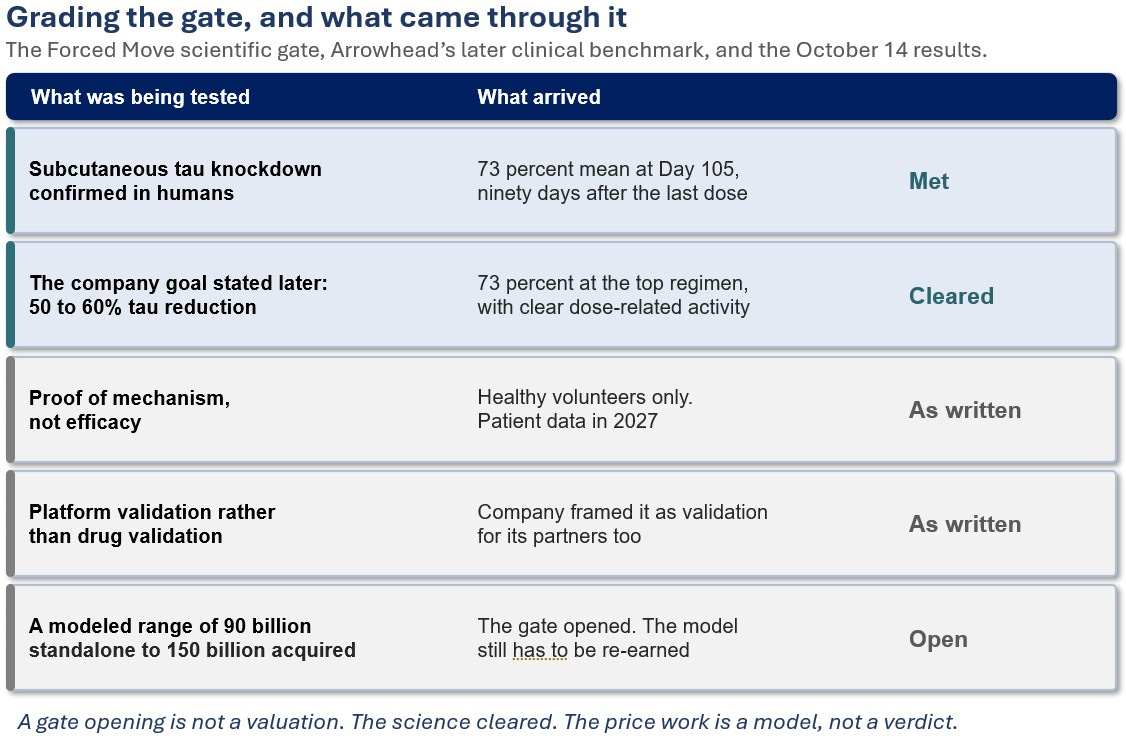
Figure 1. The Forced Move scientific gate, Arrowhead’s later clinical benchmark, and the results announced October 14, 2026.
The distinction decides what a quiet week means, though it must not become a way of never being wrong. If the first bid is what starts the cascade, a quiet week cannot show whether the cascade works. It does say how willing the potential first movers have been to begin it. The science cleared its gate. The acquisition mechanism is untested, and the one timing argument those papers did make, that a well-placed buyer would rather act before a positive readout, has not played out as I expected.
The science itself I covered in The Bishop Moved, and the market’s failure to reprice it upward in The Liver Got Paid. This note is about the board.
2. Where I was wrong
Three corrections first.
The bar was never mine. The 50 to 60 percent figure everyone quoted was Arrowhead’s, not mine. Hamilton named it on the August 4 earnings call, ten weeks before the readout, and it happens to match the range diranersen had reached. The result came in at 73, with clear dose-related activity, though the top two groups sit close together and were dosed on different schedules.
I missed a piece on the board. Novartis registered a Phase 3 of its own intrathecal tau drug in progressive supranuclear palsy in March, and started it on June 3. My first paper went out on June 22, nineteen days later, and the last on July 8. None of the four mentions the trial. It sat on a public registry for three months before I published a word.
I left a row off it too. The payoff grid had three outcomes: Novartis wins, Lilly wins, Roche wins. An independent Arrowhead appeared in that work as the baseline against which competitive losses were measured, but never as a strategic outcome anyone could choose. No row asked what happens if all three go on licensing, building alternatives or simply waiting. That is where the board sits today.
3. The contract that turned down the engine
The companion note built every number on two values. The floor is the denial value, the competitive damage a company avoids purely by keeping the most threatening rival from winning. The ceiling is that denial value plus the full worth of owning Arrowhead outright.
Denial is the engine. Take it away and a forced move stops being forced.
Which brings me to a document I had not read in June. Section 2.10.2 of the Arrowhead and Novartis agreement is titled Arrowhead Change of Control, and it anticipates exactly the scenario those papers were about. If somebody buys Arrowhead, Novartis may disband or restructure the joint committees and restrict what it shares. The clause addresses separating competing programs and walling off confidential information.
Read it for what it does to the floor. If a rival wins Arrowhead, Novartis keeps the programs it licensed, limits what the new owner learns, and carries on.
Be careful about how far that goes. The license removes one source of competitive exposure: Novartis cannot lose what it already controls merely because somebody else buys the company. It could still lose access to future programs and control of the unlicensed platform. The contract narrows the exposure. It does not tell us by how much, and recomputing the floor is work I have not done. The question is not whether the clause removes Novartis’s reason to bid. It is how much of the original denial value rested on exposure the agreement already protects. Until I separate that from the worth of future programs and control of the platform, I cannot say how much of the floor survives.
Two boundaries on all of this. The protection runs to Novartis alone. Neither Roche nor Lilly benefits from a clause they are not party to, though the rights Novartis already holds shape what either of them would be buying. It also covers the programs Novartis licensed, not the brain pipeline Arrowhead is building around them. The company intends to put three more wholly owned candidates into the clinic inside a year, which leaves substantial brain opportunity outside the existing licenses.
Denial is the engine of the whole thesis. For one of the three, the contract turned the engine down.
There is a further distinction the original numbers never settled, and it may be the more important one. The damage a company would suffer if a rival bought Arrowhead is not the same as the chance the rival tries. A very large problem conditional on somebody moving is not automatically a very large reason to move first. The model estimated the cost of losing. It did not establish how likely anybody was to start the contest.
Part One called Novartis the partner who knows too much, and argued that proximity creates urgency. The contract suggests proximity also bought insulation. The best-informed player is also the one holding contractual protection against part of the mechanism that was supposed to compel it.
It cuts the other way too, which is the more interesting half. The clause also contemplates an acquirer continuing its own competing programs, subject to those safeguards. The parties wrote down a sale without writing it off. Parts of the filed agreement are redacted, so this establishes what was anticipated rather than what anybody intends.
Which leaves Novartis with more than one move. It can run the spinal-canal program toward its 2029 completion and hold the license as a hedge against its own route being obsoleted. It can develop what it has already licensed, with whatever target-selection and substitution rights the agreement still allows. It can also bid for the rest of Arrowhead. The first two preserve choices already made. Only the third is a contest for control.
4. What the readout did, and what it did not
It may have raised the price Arrowhead would accept. The July note said a successful first readout from the brain program would lift the platform’s standalone value, and with it the price below which Arrowhead refuses to sell. That is not a new observation and I should stop presenting it as one. It was in my own work three months ago. Whether the board actually moved that number is not visible from outside.
It may also have strengthened Arrowhead’s standalone position. On Wednesday its chief executive committed to at least three new wholly owned brain programs entering the clinic within twelve months, two applications filed by year end or early next, and another partnered candidate behind them. He described the delivery platform as feeling like a company’s worth of value on its own. That is a man describing what he intends to build.
What it did not produce was a sustained repricing. Arrowhead reached 60.53 during Wednesday’s session, more than four percent above Tuesday’s close, and finished the day at 58.37. Thursday brought a rally of more than two percent in XBI, the biotechnology ETF, and thirteen cents for Arrowhead. By Friday it closed at 55.90, roughly four percent below where it stood before the readout.
I cannot tell you why. Expectations already in the price, doubt about clinical benefit, the cost of the expansion, a bad tape, or plain disagreement. The trading does not say. Any buyer still watching Arrowhead now has more information than it had on Monday and, for the moment, a cheaper quoted price. Whether the board raised the number it would accept is not visible from out here. Those are different prices set by different people.
Success can raise the acquisition price while lowering the incentive to sell.
Which suggests the odds do not rise steadily with the science. Early proof pulls buyers in by retiring uncertainty. More proof raises the price, the bargaining power and the minimum the board will accept. The window may be widest after the technology becomes credible and before independence becomes too valuable to give up.
5. Putting a number on it
A reader is entitled to ask how likely I actually think the check is. Describing a position is not an answer. Here are numbers through the end of 2027, when Arrowhead expects its first patient data and plans to move its two rare-disease brain programs into clinical development.
An acquisition here means a publicly announced definitive agreement transferring control of Arrowhead, signed by December 31, 2027. A license, a minority stake or the sale of individual programs does not count. The numbers that follow are judgments rather than calculations, and I have put the drivers beside each one so you can disagree with an input instead of an output.
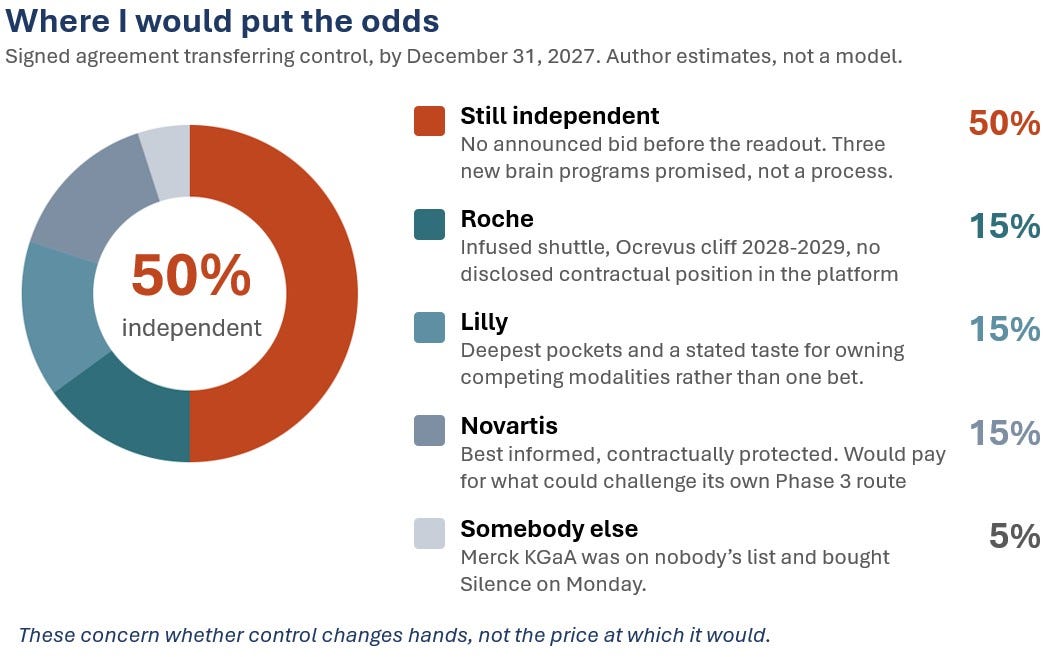
Figure 2. Author’s estimates through December 2027. Not derived from a model.
Independent, 50 percent. My largest single outcome, for five reasons. No acquisition was announced in the four months before the readout, the window in which the Novartis paper argued a well-placed buyer would get a lower entry price. Chris Anzalone spent Wednesday morning committing to three new brain programs rather than a process. Licensing captures much of what a buyer wants without paying a premium. Novartis is protected from being shut out of what it holds. The next major patient data are expected in 2027, and those results could materially change the calculation.
Roche, 15 percent. The cleanest fit on the evidence I can see, which is a judgment rather than a ranking. Its shuttle reaches the brain by infusion, Ocrevus faces biosimilars in 2028 and 2029, and it holds no publicly disclosed contractual position in Arrowhead’s brain platform. It also put a hundred million dollars into Rona the day before Arrowhead reported, which shows continued appetite for external RNAi without being evidence it intends to buy anybody.
Novartis, 15 percent. Best informed and contractually protected, which is the paradox of the three. It has a cliff of its own that the June papers underweighted: Cosentyx, at 6.7 billion dollars of 2025 sales, faces estimated US patent expiration in 2029, the same window as Roche’s Ocrevus. Two of these three are staring into the same window. The change-of-control clause protects what it holds. Buying Arrowhead would mean paying for a platform that could eventually challenge the delivery route its own Phase 3 depends on. A defensive bidder rather than an initiator.
Lilly, 15 percent. Level with the other two, and I had this too low. Its chief executive called tau a tough target eight days before the readout, but skepticism about tau is not skepticism about a delivery platform. Lilly has repeatedly backed several approaches to a problem rather than committing to one, and a buyer who hedges across technologies may find ownership attractive precisely because the winning approach is still unknown. That makes Lilly a plausible owner of the technology, not evidence it intends to become one.
Its own exposure is real and differently shaped. Trulicity produced about 4.3 billion dollars in 2025 against a US compound patent expiring in 2027, and Lilly recognized roughly 3.4 billion from its Jardiance collaboration, whose US patent runs to 2029. Mounjaro alone produced nearly 23 billion with protection into 2036. Lilly has the deepest balance sheet in the room, a large new franchise, and less immediate need than its peers to buy a replacement revenue stream.
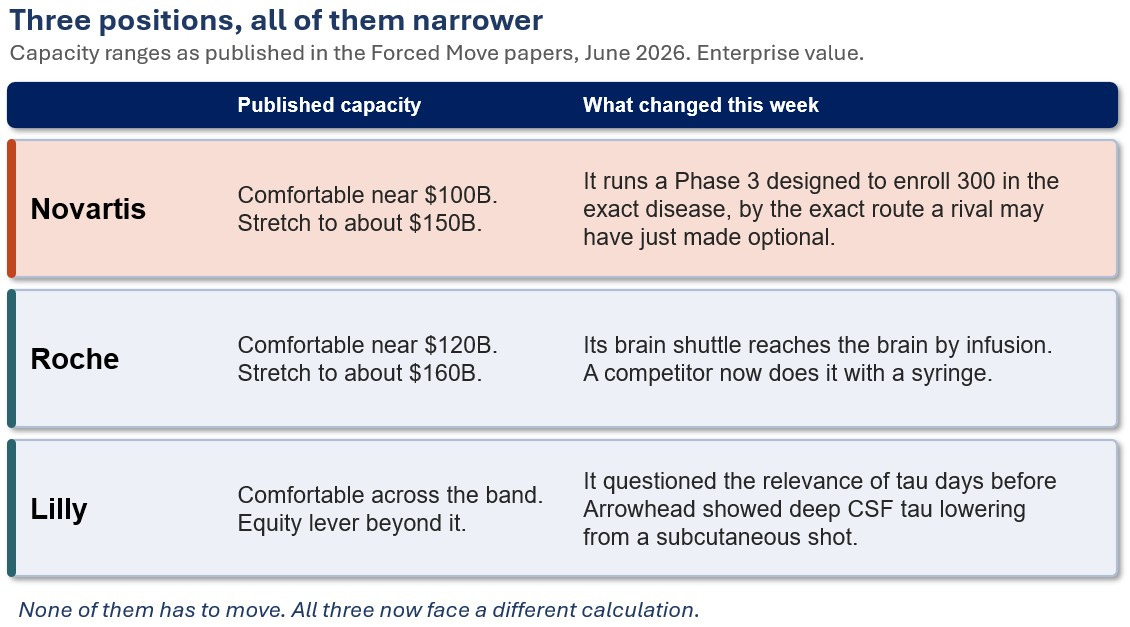
Figure 3. Capacity ranges as published in the Forced Move series, June and July 2026, on an enterprise value basis.
One more piece of history belongs here, because it involves two of the three. Arrowhead bought Roche’s entire RNAi business in 2011 and Novartis’s entire RNAi business in 2014. Chris Anzalone’s account of why is blunt: they did not believe the field could solve delivery.
Two of the companies in this note have owned this technology before and sold it, having concluded it would not work. The thesis is that they now have to buy it back at a very large multiple of what they let it go for.
That cuts both ways and both belong on the record. These boards can be wrong about RNAi. They are also willing to walk away from it.
One more piece of context applies to all three, and it cuts against me. Roche and Novartis are not alone. Several large franchises face patent and biosimilar exposure in the closing years of this decade, which widens the market for external innovation generally.
That does not help Arrowhead as much as it first appears. A company losing exclusivity in 2029 needs earnings, not merely interesting technology. An early-stage brain platform may be among the most valuable assets it could own for the decade after, and it does not fill the gap when the patents go. The same cliff that raises an acquisition budget can point that budget somewhere else entirely.
The patent cliff creates buyers. It does not select their targets.
That constraint sits under all three numbers. Each of these companies has reason to buy before the decade turns. None has an obvious reason to buy this.
The equal odds are not a claim that the three face equal pressure. They are an admission that I cannot reliably turn very different incentives into different probabilities. The last five points belong to somebody I have not modeled, which Merck KGaA demonstrated is not a hypothetical.
Fifty percent is the least precisely grounded number here. The science makes Arrowhead strategically interesting and several companies have reason to consider it. Neither establishes that any one of them bids. I cannot produce a reliable base rate fitted to these circumstances and will not pretend otherwise. The estimate reflects my judgment of the combined incentives, not evidence that a transaction is already under discussion. It is a forecast and it can be wrong.
One more boundary. These concern whether control changes hands, not what somebody pays for it. The valuations in the original papers are separate estimates, and the October readout validated none of them.
A word about those valuations, since the range in the companion note starts above the largest biotech acquisition ever completed and runs to roughly double it. Bristol Myers Squibb paid about 74 billion dollars for Celgene. Roche paid 47 billion for Genentech. Pfizer paid 43 billion for Seagen and its entire antibody-drug-conjugate platform. Against that record, 90 to 150 billion dollars is off the top of the chart, and anybody checking the number against precedent will find it there.
The defense is not that Arrowhead is special. It is that the number was never a price forecast. A ceiling is what a buyer could rationally pay in a contested situation, denial value plus the worth of owning the asset outright. What somebody would actually pay is a different question and a lower number.
One feature of the asset is genuinely different, though it is a category point rather than a superlative. A normal biotech acquisition prices a pipeline: molecules, indications, launch dates, probabilities. Arrowhead would be bought for the capability that produces pipelines, across seven cell types it can now address, five of them already in the clinic. Nobody has sold a validated multi-tissue delivery engine before, which is why there is no comparable transaction to anchor against.
A number with no precedent is not a high number. It is an unanchored one.
That cuts both ways, and the second way is the one shareholders should sit with. An unanchored number can land far below where I modeled it as easily as above.
A willing buyer is also not enough. A transaction needs Arrowhead’s board and an acquirer to agree on a number, and that may be the largest uncertainty in the whole exercise. It is the one variable none of the outside analysis can see.
If Arrowhead is still independent in January 2028, the original papers will have described pressure without producing the move they contemplated. That would not validate the 50 percent. One outcome never validates a probability.
6. Why you would not see it coming
I argued in The Liver Got Paid that the models pricing Arrowhead have no field for what it proved. This section asks a narrower question a reader put to me: what would acquisition interest look like from the outside, if it existed? The honest answer is that it might look like silence, and the reason is worth understanding.
A preliminary approach generally triggers no duty to announce it. Discussions with a prospective buyer and its advisers can stay confidential under appropriate confidentiality arrangements. Regulation FD does not impose a blanket twenty-four-hour deadline on them, and a preliminary approach is not one of the enumerated Form 8-K events. Nasdaq expects prompt disclosure of material information but allows delay for confidential negotiations, which is exactly what that carve-out exists for.
Talks can therefore sit in the dark lawfully until they are signed. A leak or unusual trading can force the issue sooner, at which point the company may have to respond on a day it did not choose. Neither is guaranteed to happen. The Silence deal announced on Monday, which the next section takes up, is one illustration: no leak I saw, no unusual tape, just a finished agreement.
You may see it in the tape. You may see no sign of it at all until an agreement is signed.
None of that is legal advice and I no longer practice. It explains why an absence of news is not evidence of an absence of interest, and why anyone waiting for a press release to tell them the auction opened has the sequence backwards.
7. Three sessions later, somebody moved
This note was finished last week. On Monday morning Merck KGaA announced an agreement, dated the day before, to acquire Silence Therapeutics, expected to close in the first quarter of next year, for $1.1 billion in enterprise value, $1.3 billion in equity, all cash, at a 130 percent premium to Friday’s close and 82 percent over the thirty-day average.
Silence is a liver company. The drug driving the deal silences a gene expressed almost exclusively in liver cells, in a rare blood cancer, and it has finished Phase 2 with a positive result. One principal value driver, with other pipeline behind it including a Phase 3-ready program against Lp(a). No approved medicines. No commercial organization.
Three details in the announcement matter more than the price.
It was competitive. Silence’s chairman called it the result of a competitive sale process. The announcement does not say how many bidders there were, or who, and leaves it there.
The buyer was outside my framework. I modeled Novartis, Lilly and Roche as potential buyers of Arrowhead. Merck KGaA was not among them, though it had bought SpringWorks the year before. Paying $1.1 billion for Silence does not establish that Merck would pay ten or a hundred times that for Arrowhead. It does establish what my framework never examined: the set of companies willing to own RNAi reaches past the three I named.
I did not see it coming. No warning, no leak I caught, no unusual tape I noticed. Three trading sessions after I argued you would not see one until it was done, Silence supplied the illustration. The negotiations were invisible to me. The agreement was not.
Now set the two companies beside each other, because the comparison is uncomfortable. Silence: a Phase 3-ready rare disease candidate, a second advanced cardiovascular program, an RNAi platform, no approved medicines. Enterprise value $1.1 billion. Arrowhead on Friday: an approved medicine on the market, positive Phase 3 data in hand for a label expansion, human data in five organ systems, two partnered brain programs with three more promised inside a year, the first reported clinical demonstration of substantial spinal-fluid tau lowering after a subcutaneous dose, and roughly $1.6 billion in cash and securities. Equity value near $7.9 billion at Friday’s close. Enterprise value around $7.5 billion once the cash, the convertible notes and the royalty obligations are netted, roughly seven times what Merck agreed to pay for Silence. That figure is approximate: the price is Friday’s, the balance sheet is June 30, and the treatment of the royalty obligations moves it either way.
That is not a claim that Arrowhead should be worth some multiple of Silence. The companies are not comparable and I will not pretend otherwise. It is an observation about what a buyer pays once it has decided, and about how little the public market appears to have rewarded what happened last Wednesday.
Merck put $1.1 billion of enterprise value on a liver RNAi business. It did not buy a license. It bought the company.
8. The best argument against all of this
There is a better objection than the one I used to lead with, and it is not that management sounds enthusiastic about going it alone. Executives say that whether or not a deal is possible.
The real objection is economic. The platform may be worth more to Arrowhead as a licensing and commercial business than any buyer is currently willing to pay to own it outright. Novartis showed in August of last year that substantial access can be bought without buying the company. Sarepta showed the same with the muscle programs. A buyer acquires the unpartnered pipeline, the research engine and the right to decide who gets access next. It does not acquire the ability to unwind rights already granted.
There is a point where renting stops being cheaper. One program can be licensed. The next ten bring upfronts, milestones, royalties, exclusivity limits and the standing risk that somebody else takes the target you wanted. Ownership wins when controlling the engine is worth more than the flexibility of buying what it produces. For these three companies, the public evidence does not establish that Arrowhead has crossed that line.
A further possibility is worth holding, and it is not bearish. There may be many buyers for Arrowhead’s technology and no buyer for Arrowhead at a price its owners would take. Those outcomes are not contradictory. They are what happens when the parts are worth different amounts to different companies and no single buyer can capture all of them. A platform can become indispensable without the company becoming an acquisition, and a decade of licensing revenue is not necessarily the worse outcome for anybody holding the stock.
Arrowhead does not look like a company preparing to sell either, and the expansion Chris Anzalone announced on Wednesday is the evidence. That counts for a little. It is the weakest of the three arguments in this section.
The recent behavior of the buyers points the same way. In the past two weeks Novartis committed $575 million up front to license from a Chinese biotech and Roche put up to a hundred million into an obesity program from Suzhou. Neither is an acquisition. Both are companies choosing access over ownership, which is the choice Novartis already made with this very platform fourteen months ago.
The papers themselves were careful on this point in a way the title was not. A forced move describes a position in which every alternative is worse. It does not promise a timetable. Players sit in difficult positions for a long time, and the position does not care.
What would argue the other way. Three results would shift the argument from licensing back toward ownership. Patient data showing clinical benefit rather than biomarker movement, because a working drug is harder to rent. A second brain target reaching the same knockdown, because that converts a result into a capability. Patent claims giving Arrowhead real leverage over a rival’s freedom to operate would strengthen the ownership case as well, because control of exclusion rights can be worth more than access to the technology. None has yet been established to a degree that would settle the ownership question.
9. What would make me wrong
The result is thinner than the headline. The 73 percent is the mean for six treated volunteers in an eight-person cohort, at the Day 105 assessment. Patient data are not expected until 2027, and healthy people are not sick people.
One brain target is not a brain franchise. ARO-MAPT has shown substantial activity on one biomarker against one target. Whether the same approach produces comparable knockdown against other brain targets is unresolved in humans. If the chemistry turns out to be target-specific, what I have been calling a company’s worth of value may be one exceptional drug with a much narrower delivery story. Arrowhead disputes this, and its claim is narrower and stronger than the one I just described. Chris Anzalone’s position is that once delivery into a cell type is validated, further targets in that same cell type follow, because the cell does not care which sequence it receives. Reaching a new cell type is the hard part; a second gene in a cell type already reached is not. By that account the brain is open and a second brain target should work. It is still a claim nobody has tested.
A competitor may close the gap before any buyer moves. Denali already has an approved medicine using receptor-mediated transport across the blood-brain barrier, and a separate tau program in patients reading out in the first half of next year. If that reads well, Arrowhead keeps its scientific first and loses the assumption that first means best placed.
The price argument can fail in both directions. Large companies have sat through stronger signals than this one. A company spending hard on expansion can also get cheaper rather than dearer, if the market decides the spending lacks discipline. Rising value is not the same as urgency.
The target is still unproven. Lowering tau has not been shown to change the course of anyone’s disease. Biogen reduced tau on brain scans, produced encouraging cognitive signals, and still missed its primary endpoint. If the mechanism fails, the delivery platform keeps real value against other targets and this particular drug does not.
The one that would retire the thesis. There is a way to be right about the platform and wrong about the rest of it. If patient data strengthen, if other brain targets validate the route, and the large companies keep licensing instead of buying, then what I got wrong was not the science. It was the assumption that anybody needs to own all of this. The technology can be exactly what I thought, and the argument for buying the company can still fail.
10. The clock runs while you think
In chess the clock does not stop for difficulty. A player in a hard position can think for forty minutes, and at the end of forty minutes the position is exactly what it was, minus forty minutes.
I said in June that three companies would be forced to move. The more precise claim was that the first buyer would put the others in check. Whether they answer is the part the model has yet to prove.
Three tests, then. The science passed the first. The second is whether somebody makes a credible bid. The third is whether that bid forces the competitive response my original model anticipated. Only the first has been completed.
The gate I named opened, inside the window I pointed at, and the result came through it clear of every hurdle anyone had named. The position that condition was supposed to create now exists. Three companies are sitting in it. One of them has a registrational trial running on the alternative route. None of them has to act at all.
A forced move is not a prediction that somebody moves. It is a description of what is left when they do.

A Note on Supporting Independent Research
If this white paper has been valuable to you, whether it shaped your thinking, validated your conviction, or simply saved you the time of doing this work yourself, a voluntary contribution is genuinely appreciated and directly funds the next paper.
For individual investors and readers
Any amount you feel reflects the value you received is welcome and meaningful. A contribution in the range of what you might pay for a single premium research report is a thoughtful gesture that makes a real difference.
For family offices, investment funds, hedge funds, and research platforms
This paper is the caliber of work that institutional research desks bill significant retainers to produce. If your team referenced it, distributed it internally, or used it to inform a position, a suggested contribution of $1,500 reflects the professional value of the analysis, though any amount is meaningful. Your support makes it possible to continue publishing at this level without a paywall that limits the reach of the ideas. If your organization requires an invoice to process a payment, please reach out directly at bioboyscout@gmail.com and one will be provided promptly.
There is no obligation and no expectation. This is purely a thank you for work that meant something to you.
Zelle: (847) 227-7909
Thank you for reading, and for being part of a community that takes this thesis seriously.
— Robert Toczycki | BioBoyScout
Important Risks, Disclosures, & Disclaimers
The author, Robert Toczycki (aka BioBoyScout), certifies that:
all views expressed in this white paper accurately reflect his personal opinions about the topic discussed;
he was not compensated in any form for producing this white paper; and
he has not received and does not receive compensation from Arrowhead Pharmaceuticals.
This paper is provided for informational and analytical purposes only. It does not constitute investment advice, financial advice, legal advice, or a recommendation to buy, sell, or hold any security, and it is not a recommendation as to any corporate course of action. The author holds a long position in Arrowhead common stock. Past performance is not indicative of future results, and forward-looking analysis is inherently uncertain. The author and BioBoyScout are not registered investment advisors. The author assumes no obligation to update this paper. The characterization of what is and is not in the published literature, the probability judgments, and the chess analogy are the author’s own.
The Forced Move papers were published on June 22, June 29 and July 6, 2026, with the companion note on July 8. ARO-MAPT results are from Arrowhead's announcement and investor webinar of October 14, 2026. Arrowhead's acquisitions of the Roche and Novartis RNAi businesses in 2011 and 2014, and the platform and pipeline figures in Section 5, are as described by Chris Anzalone in a BioCentury interview of October 16, 2026. The Arrowhead and Novartis agreement was entered into on August 29, 2025; the change-of-control provision is at Section 2.10.2 and the target-selection procedures at Section 3.1.2, and portions of the filed agreement are redacted. Novartis's Phase 3 study of NIO752 is registered as NCT07498426.
Patent expiry years are estimates and vary by territory; sales figures are as reported for 2025 and, where a product is partnered, reflect the named company's recognized revenue rather than worldwide product sales. Arrowhead's enterprise value is approximate, derived from its October 16 closing price and its cash and securities position as of June 30, 2026. Merck KGaA's agreement to acquire Silence Therapeutics was announced on October 19, 2026, and the Novartis and Roche licensing transactions on October 2 and October 13. Diranersen results are from Biogen's announcements of May and July 2026. The probabilities in Section 5 are the author's own estimates and not the output of any model.
About the Author
BioBoyScout is the publishing name for Robert Toczycki, an independent biotech investment research writer based in Chicago. The BioBoyScout series publishes institutional-grade analysis of structural dynamics in RNA-class therapeutics, with particular focus on Arrowhead Pharmaceuticals’ TRiM platform and the broader competitive landscape. Robert is a registered US Patent Attorney with a JD, an Executive MBA completed at the top of his class, and a BS in Mathematics and Computer Science from the University of Illinois at Urbana-Champaign. He has a deep passion for financial analysis, particularly identifying valuation discrepancies and demonstrating them through rigorous, data-driven research and solid analytics.
Comments or questions: bioboyscout@gmail.com.
Copyright © 2026, BioBoyScout. All Rights Reserved.