

Robert Toczycki, JD, MBA
bioboyscout.com
bioboyscout@gmail.com
847.227.7909
X: @BioBoyScout
1. What Arrowhead reported this morning
On September 15, Arrowhead released interim topline results from the Phase 1/2a study of ARO-DIMER-PA. The numbers below are from that release and nothing else has been presented. Fuller detail goes to a medical congress later.
ARO-DIMER-PA is one molecule carrying two payloads. One switches off PCSK9, which governs how much LDL cholesterol the blood clears. The other switches off APOC3, which governs triglycerides. Both targets are reachable through hepatic delivery, and both have been silenced before, separately, by separate drugs.
Putting two independent triggers on one conjugate, and showing that both stay active in a person, is the novel part.
The obvious reading of this morning’s release is a convenience story. Two mechanisms, one injection, a large and undertreated market. That reading is correct and it is the smaller half of what happened.
2. The number to look at is the gap
Arrowhead reported mean maximal single-dose reductions of 72 percent for PCSK9 and 88 percent for APOC3.
A sixteen point spread sounds lopsided. The right question is not whether the two numbers match each other. It is whether each one is close to what a drug built for that job alone would have delivered.
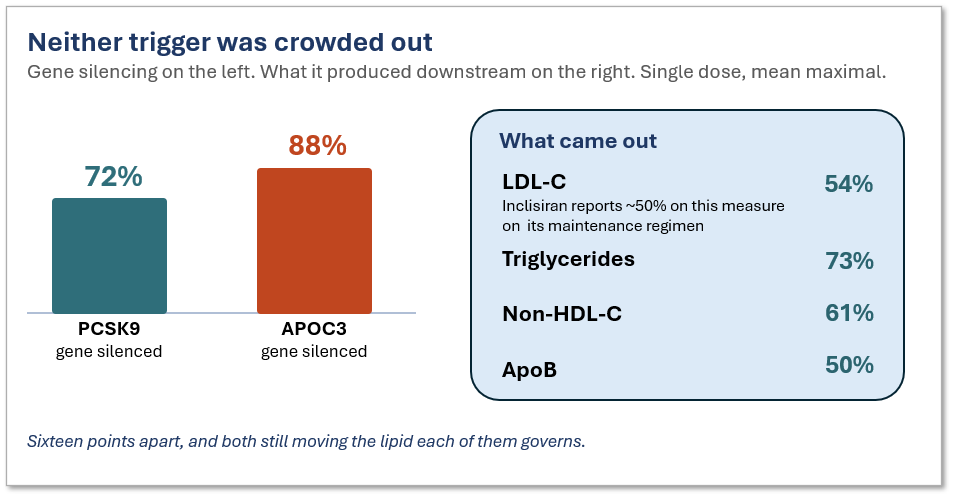
Figure 1. Reductions as reported. Comparisons to other drugs are across different trials and populations and should be held loosely.
On that test both halves did their work. APOC3 fell 88 percent, which sits in the range a dedicated APOC3 drug produces. PCSK9 fell 72 percent. Downstream, LDL cholesterol fell 54 percent from a single dose, in the range of the roughly 50 percent LDL-C lowering reported with inclisiran on its established regimen. Nothing in those numbers suggests either trigger became pharmacologically irrelevant because it traveled with the other.
Whatever competition may exist between them, neither trigger was functionally crowded out. That was the thing worth finding out, and it is the thing the release does not spell out.
Had one looked strong while the other barely moved, Arrowhead would still have had a lipid drug. What it would not have had is clean evidence that two payloads can share the architecture without one becoming materially compromised. Future dimers will still be engineering projects. They no longer begin with the unanswered question of whether two functional triggers can coexist on the architecture at all.
3. What the lipid numbers say
Downstream of the gene silencing, the numbers a cardiologist cares about came out well.
LDL cholesterol down 54 percent. Triglycerides down 73 percent. Non-HDL cholesterol down 61 percent. ApoB down 50 percent.
James Hamilton pointed at the last one and he was right to. Because each atherogenic lipoprotein particle carries one ApoB molecule, ApoB estimates the total burden of those particles rather than the cholesterol sitting inside one class of them. In a patient whose problem is both high cholesterol and high triglycerides, treating one number can leave much of that burden intact. Fifty percent off ApoB from a single injection is the number that shows most clearly how broadly the treatment reduced that burden.
The comment from Steven Nissen in the release is worth reading for what it highlights. Even with intensive statins and a PCSK9 inhibitor, substantial risk remains in these patients, and the triglyceride-rich remnants may be part of what is left. That is a cardiologist saying the current standard of care does not finish the job.
4. Why one to two is the expensive jump
Here is why this matters beyond a lipid drug, and it comes down to where the difficulty sits.
Going from zero triggers to one was solved years ago and every approved siRNA drug does it. Going from one to two asks something genuinely new. Does a single conjugate carry two different payloads to the same cells. Do both get loaded into the silencing machinery. Does one crowd out the other. Does the molecule survive being twice as complicated.
Going from two to three still raises engineering questions. A third trigger could bring new competition for the silencing machinery, new potency or chemistry constraints, new manufacturing problems. It is a different kind of question now, though. Before this morning, the open issue was whether two triggers could share one architecture and both stay functional.
That first multiplexing boundary looks crossed. The next one has not been tested.
5. What this does to a pipeline
Many of the diseases medicine struggles with are not single-target problems. They are networks, with several genes or pathways contributing at once. Building one small molecule that precisely modulates several chosen targets is extraordinarily hard. Giving a patient a separate biologic for each is technically possible and quickly becomes an exercise in dosing, toxicity, manufacturing and cost.
Worth being precise about what that does and does not mean. This is not polygenic risk in the genetic sense, where hundreds of common variants each make small contributions and there is no practical way to address the whole distributed signal with a drug. It is the narrower case where a handful of known targets in the same tissue, reachable through the same delivery chemistry, each matter, and treating one leaves the others running.
RNAi offers a different possibility. Target recognition is encoded largely in sequence, and if multiple sequences can share one delivery architecture without losing activity, multiplexing starts to look less like combination therapy and more like molecular programming. Until this morning that proposition rested on chemistry and preclinical work. Now there is a human dataset behind it.
Which makes the interesting question not what ARO-DIMER-PA does for mixed hyperlipidemia. It is which combinations Arrowhead nominates next, and whether the patent estate already tells you.
It does, partly. US-20260176631-A1 is directed to hepatic delivery platforms carrying multiple RNAi agents on one conjugate. US-20250376688-A1 is directed to PCSK9. US-12365899-B2 covers APOC3. A further filing covers dual inhibition of both targets together, which the company lists in its annual report as its APOC3 and PCSK9 dimer group. Arrowhead did not discover this morning that dimers might work and then go looking for protection. The architecture was mapped first.
6. What got de-risked, and what did not
The biological question, whether both targets can be knocked down at the same time, looks answered. The architectural question, whether two triggers can share one conjugate and both stay active, now has human evidence behind it. The major product questions remain open: dose, durability, repeat dosing, safety at the intended regimen, and eventually whether any of it prevents a heart attack.
The biggest de-risking this morning was architectural, not commercial.
Four things, and they matter more than the ones being quoted.
No time points. Mean maximal reduction is the deepest number reached, not the number three months later. For a drug meant to be given quarterly, the trough matters more than the nadir and it is not in this release.
No dose attribution. Escalation completed through 400 mg. Whether 72 and 88 came from the same dose, or whether the best PCSK9 number and the best APOC3 number came from different cohorts, changes how you read the symmetry.
No numbers per cohort. The study enrolls up to 78 subjects across single and multiple dose portions. Early cohorts are small and these are means.
The multiple dose portion is still running. Which is where a quarterly regimen actually gets defined. A single-dose result tells you the architecture works. It does not tell you what the product looks like.
One thing the release does report and this note has otherwise passed over. The most common adverse events were injection site reactions and headaches, with no drug-related serious adverse events, and escalation completed through 400 mg. That is reassuring for this stage. A small single-dose dataset cannot establish the safety profile of the repeat-dose regimen the drug would actually be given on.
Additional detail goes to a medical congress, which is where these questions get answered.
7. What I would watch from here
Whether a second dimer gets nominated in the months ahead, and what it pairs. That will be the first test of whether Arrowhead treats this morning as a one-off product or a reusable capability.
Whether the durability supports quarterly dosing when the multiple-dose data arrives.
Then whether anybody else attempts it. Arrowhead now has a human result and a patent estate around the architecture. The interesting signal over the next year is how many other companies start talking about multi-target RNAi, because that tells you whether the field thinks this generalizes.
A drug that lowers two lipids is a product. A molecular architecture that can silence two independent targets at once is a capability.
Arrowhead reported the product this morning. The capability may end up worth more.

A Note on Supporting Independent Research
If this note has been valuable to you, whether it shaped your thinking, validated your conviction, or simply saved you the time of doing this work yourself, a voluntary contribution is genuinely appreciated and directly funds the next paper.
For individual investors and readers
Any amount you feel reflects the value you received is welcome and meaningful. A contribution in the range of what you might pay for a single premium research report is a thoughtful gesture that makes a real difference.
For family offices, investment funds, hedge funds, and research platforms
This paper is the caliber of work that institutional research desks bill significant retainers to produce. If your team referenced it, distributed it internally, or used it to inform a position, a suggested contribution of $1,000 reflects the professional value of the analysis, though any amount is meaningful. Your support makes it possible to continue publishing at this level without a paywall that limits the reach of the ideas. If your organization requires an invoice to process a payment, please reach out directly at bioboyscout@gmail.com and one will be provided promptly.
There is no obligation and no expectation. This is purely a thank you for work that meant something to you.
Zelle: (847) 227-7909
PayPal: paypal.me/bioboyscout
Thank you for reading, and for being part of a community that takes this thesis seriously.
— Robert Toczycki | BioBoyScout
Important Risks, Disclosures, & Disclaimers
The author, Robert Toczycki (aka BioBoyScout), certifies that:
all views expressed in this note accurately reflect his personal opinions about the topic discussed;
he was not compensated in any form for producing this note; and
he has not received and does not receive compensation from Arrowhead Pharmaceuticals.
This note is published by BioBoyScout and is intended for informational and educational purposes only. It does not constitute investment advice, a solicitation to buy or sell securities, or a guarantee of future results. The author holds a long position in Arrowhead common stock. Arrowhead Pharmaceuticals (ARWR) is a publicly traded company; investments in its shares involve material risks, including the risk of total loss. All financial projections, acquisition price estimates, and valuation analyses herein are hypothetical frameworks for analytical purposes and do not represent predictions of actual outcomes. Readers should conduct their own due diligence and consult a registered investment advisor before making investment decisions. All ARO-DIMER-PA figures are from the company release of September 15, 2026, which reports interim single-dose topline results. Comparisons to inclisiran and to APOC3-targeting drugs are across separate trials with different populations and designs. Patent filings referenced are as published. The framing of the architectural problem is the author's own.
About the Author
BioBoyScout is the publishing name for Robert Toczycki, an independent biotech investment research writer based in Chicago. The BioBoyScout series publishes institutional-grade analysis of structural dynamics in RNA-class therapeutics, with particular focus on Arrowhead Pharmaceuticals’ TRiM platform and the broader competitive landscape. Robert is a registered US Patent Attorney with a JD, an Executive MBA completed at the top of his class, and a BS in Mathematics and Computer Science from the University of Illinois at Urbana-Champaign. He has a deep passion for financial analysis, particularly identifying valuation discrepancies and demonstrating them through rigorous, data-driven research and solid analytics.
Comments or questions: bioboyscout@gmail.com.
Copyright © 2026, BioBoyScout. All Rights Reserved.