

Robert Toczycki, JD, MBA
bioboyscout.com
bioboyscout@gmail.com
847.227.7909
X: @BioBoyScout
1. A loan nobody had to touch
On November 2nd Arrowhead paid Sixth Street $404.4 million to retire a loan with $363.8 million outstanding, borrowed $400 million back from the same lender, and paid another two percent in fees on the way in. Net the cash in and out and the transaction cost about $12 million, with the balance going from $363.8 million to $400 million. Call the whole exercise $48 million. That is the immediate cash and principal arithmetic, before counting the interest and contractual obligations Arrowhead escaped.
No part of the old agreement was due. There was no covenant breach, no maturity wall, no lender demanding payment. Arrowhead took on that debt to change the terms of a loan it could have gone on servicing.
Companies do not add $48 million to net debt without expecting a return. The question is what they bought.
2. Fifteen percent, compounding
The old facility was the kind of paper a company signs when it does not have better options. Fifteen percent interest, paid in kind, which means Arrowhead wrote no checks and the interest was added to what it owed instead. The balance grew on its own every quarter no matter what the company did.
On top of that sat a minimum repayment multiple, a floor on what the lender collects no matter how early the loan is retired. If Arrowhead paid it off on or before August 2028, it owed twice what Sixth Street had put in. After that date, two and a half times.
Then the sweeps. A sweep requires a company to put part of specified incoming money toward paying down the loan rather than keeping it for the business. This one applied to upfront payments, milestones, royalties from partnerships, and commercial revenue, so a slice of every deal Arrowhead signed went to the lender. Not just a lien on assets. A claim on the future.
That is a lender with a seat at every negotiation Arrowhead was ever going to have.
3. The sweep is the tell
The sweeps are where the refinancing stops being a finance story. Of all the terms Arrowhead negotiated away, they say the most about the future management wanted the freedom to pursue. Think about who the sweep actually costs. If a company gets acquired, the buyer retires the debt at closing and every forward-looking clause in the agreement dies unused. The sweep on milestones never operates. The sweep on royalties never operates. A company planning to sell has little reason to spend money removing a provision the transaction erases for free.
The sweep matters most to a company that wants the freedom to stay independent, collecting those payments year after year. Removing it does not prove Arrowhead intends to. It means management no longer has to give up the option.
You do not pay to protect future revenue unless keeping it is an option worth preserving.
Arrowhead has a specific reason to care about that clause. Another partnership is a plausible source of substantial capital, and under the old agreement a portion of those proceeds went to the lender before reaching the company. Novartis paid $200 million up front in 2025. Sarepta has taken two programs.
Now it stays with the company. Whatever Arrowhead signs, the lender no longer takes a mandatory slice.
4. What the lender gave up
Arrowhead is not the only party whose behavior is worth reading here. Sixth Street had a contract entitling it to twice its invested capital, and it accepted roughly sixty-eight million dollars less than that to write a new one.
Lenders do not hand back money out of affection. They do it when the alternative is worse, and the alternative here was losing the position entirely. By late 2026 Arrowhead had an approved drug, a launch underway, and an application in a real-time FDA review pilot. A company with that profile does not keep paying fifteen percent. It refinances somewhere else, Sixth Street collects its multiple, and the relationship ends.
The $68 million was the price of staying in. What Sixth Street bought with it was five more years of exposure to Arrowhead, secured first in line against substantially all of the company, intellectual property included.
Sixth Street gave up the guaranteed payout for a five-year term at market rates. That does not tell us whether it expects Arrowhead to stay independent, since a creditor gets repaid either way and change of control is still an event of default. What it tells us is that a credit investor with full diligence access looked at this company and chose exposure over exit.
It is the only outside read on Arrowhead’s position that comes with $400 million behind it.
There is a narrower read worth taking from the same document. The old facility paid interest in kind, letting Arrowhead hold its cash while the obligation compounded. The new one asks for roughly $38 million a year in cash, at a far lower rate.
Sixth Street also agreed to cut the minimum cash covenant from $150 million to $125 million. Taken together, those terms describe a lender willing to underwrite Arrowhead on a conventional cash-pay structure, which is not what the 2024 agreement looked like.
Which is meaningful and also limited. Arrowhead reported about $1.57 billion in cash and investments at the end of June, so $38 million of annual interest is roughly two and a half percent of the balance. A lender can be comfortable with that arithmetic while holding no view at all on how Redemplo sells.
The lender does not have to believe every program works. It has to believe Arrowhead can pay even when some of them do not.
5. An AND company
Chris Anzalone has a phrase he keeps coming back to. On the Sarepta call in November 2024 he used it about discovery: Arrowhead is an AND company, not an OR company. At the Bank of America healthcare conference this past May he used it about the commercial build: we are an AND company, we are not an OR company, R&D is great but unless you can bring the medicines to patients there is no point in that.
He has applied it to research and to commercialization. The one place it was never true was the balance sheet.
Under the old facility Arrowhead had three ways to fund itself and every one of them was expensive. Issue equity at a price nobody wanted to issue at. Sign a partnership and watch a piece of the upfront go to the lender. Sell the company. Each path carried a cost, and the financing agreement made several of those costs harder to escape.
That is an OR company, and an OR company takes the best offer it gets.
What the November agreement produced is four ways to raise money that leave the company intact, none of them free. Room to issue more than a billion dollars of additional convertible debt, where the old facility permitted no further issuance, and which can carry a low coupon without selling stock outright. A priority review voucher Arrowhead can sell without asking the lender, and since the FDA granted plozasiran entry into its STAR pilot in October, the sNDA qualifies for a six-month priority review without consuming the voucher. The right to license plozasiran outside the United States, also without asking. The sweep gone, so the next partnership funds the company instead of the loan.
Those are not alternatives to each other. Arrowhead can do all four.
An AND company does not have to take the best offer it gets. It gets to decide whether the offer is good enough.
6. Whoever has a date loses
All of that is about Arrowhead. The more useful half of the question is who sits on the other side of the table, and what their calendars look like.
The industry is walking into the largest loss of exclusivity it has ever faced. Roughly $300 billion of revenue is exposed to loss of exclusivity by 2030. Merck alone has to replace Keytruda, roughly $30 billion a year and close to half the company, with the clock running out at the end of the decade. Pfizer has been described by people who watch this closely as being on a hamster wheel, replacing drugs that keep falling off patent, playing defense on revenue that is walking away.
Those are not vague concerns about the future. They are dates. A patent expires on a particular day, the generics file, and the revenue does not come back.
Now set Arrowhead next to that. The maturity barely moved, from August 2031 to November 2031, so the headline on this is not the calendar. What changed is the ground between here and there. The old facility carried scheduled principal payments of $40 million in 2027 and $15 million a year after that. The new one requires none of that until the loan comes due. The minimum cash covenant, the floor Arrowhead has to keep in the bank or else be in default, came down from $150 million to $125 million. The interest is now paid quarterly in cash at a far lower rate rather than compounding into the balance.
Arrowhead did not buy five more years. It bought a great deal more freedom inside the five years it already had, and the companies that might want to buy it bought no freedom at all.
That inversion is the whole negotiation. In a negotiation, the party under the greater time pressure has less freedom to walk away. Until November 2 the pressure ran one direction, toward a company with expensive debt and a compounding balance. It now runs the other way, toward buyers with holes in their 2030 revenue and a shrinking list of assets large enough to fill them.
7. The buyers have told us what they want
The useful part is that none of this requires guessing at the other side. Big pharma has been unusually candid about how it sources deals.
Dave Ricks runs the one large buyer with no meaningful patent cliff of its own, and Lilly has still done roughly forty deals this year and spent more than twenty billion dollars doing it, the most in the company history. In September he described the strategy to Bloomberg in a sentence worth reading twice.
What we like to do is look at data that is not yet mature and make a bet on it way before these companies are worth $5 billion.
The reporting around it was blunter still. Lilly aims to move before major data readouts and ahead of any bidding wars. Which is a rational way to run business development, and a hard sentence to read if you are the company being bought.
In the same interview Ricks explained why Lilly can work that way. We do not have a time crunch, he said, and companies that do get pushed into hurried deals. He has a phrase for it: shopping when you are hungry.
It is a good description of why desperate buyers overpay. It is an equally good description of why desperate sellers take the first number. Arrowhead just made itself less hungry.
Arrowhead crossed an evidentiary threshold on October 14. Total tau in spinal fluid fell seventy three percent in healthy volunteers after two subcutaneous doses, the first human evidence that the delivery platform reaches the central nervous system, and the window Ricks is describing narrowed that morning. A buyer offering pre-readout economics now would have to explain why the new evidence deserves no premium.
There is also a marker already sitting in the public record, and Arrowhead did not have to set it. In late summer 2025 Novartis paid $200 million up front in a collaboration led by ARO-SNCA, at a point when nobody had shown the platform worked in a human brain at all. One lead program and additional collaboration targets, before the proof.
The timing matters for a second reason. Arrowhead refinanced nineteen days after showing the platform could knock down tau in a human, and before showing the knockdown helps a patient. Those are two very different valuations. The new agreement gives the company room to travel from the first toward the second without having to accept a price along the way. Whether that journey adds value is a clinical question. Whether Arrowhead can afford to attempt it is a financial one.
What a buyer most wants to avoid is a process. Ricks said as much: ahead of any bidding wars. An AND company that can afford to walk away is a company that can run one.
8. The same deal cut both ways
Now the part that runs the other way, and it is in the same document.
Under the old agreement, an acquirer had to clear the multiple. The 8-K gives the number: retiring the loan in full would have cost about $472 million, since the $404.4 million Arrowhead actually paid came at a $68 million discount to what the contract called for. Every dollar of that came out of what a buyer could offer shareholders.
That is gone. What replaced it is a make-whole premium through May 2028, which compensates the lender for early repayment, and after the eighteen-month mark a prepayment premium capped at two percent, falling to one percent and then away entirely. The 8-K does not give the make-whole formula, so the near-term saving to an acquirer cannot be calculated yet. What is settled is that the minimum multiple is gone.
The refinancing made Arrowhead potentially cheaper to acquire and considerably better placed to refuse. Both effects come out of the same agreement.
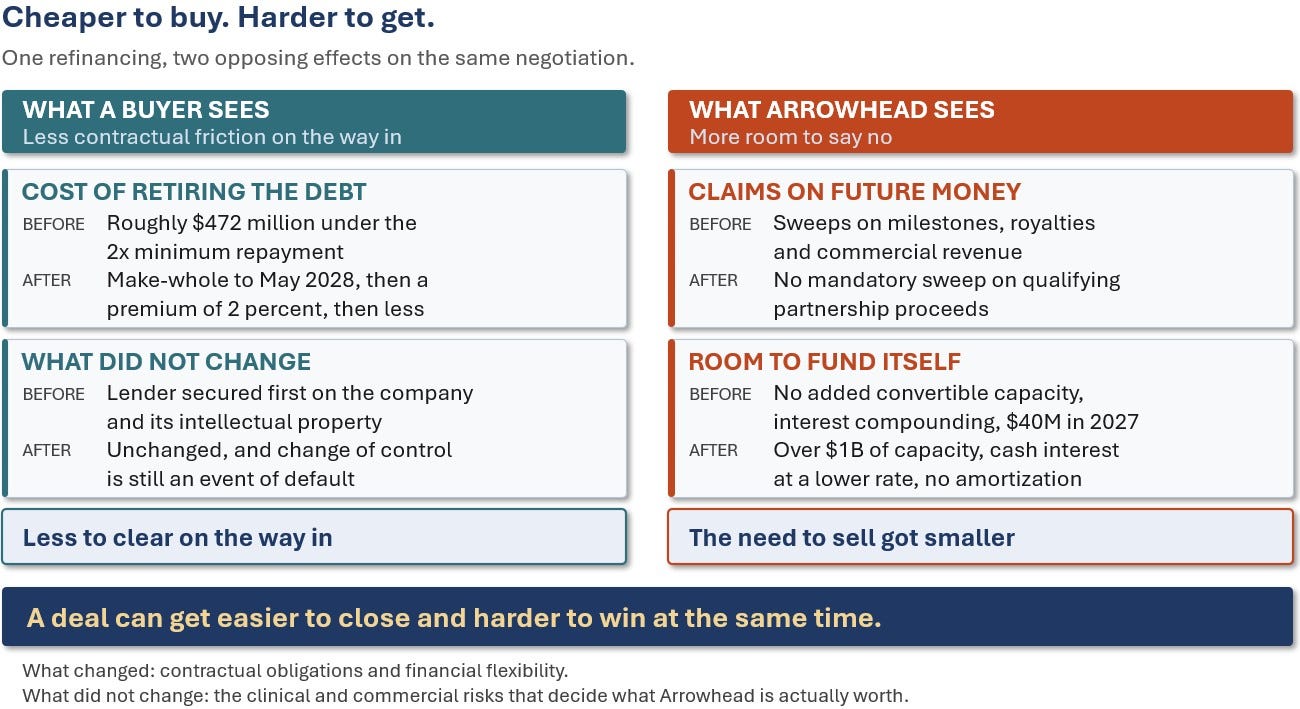
Figure 1. The same agreement, read from both sides of the table.
A spreadsheet can calculate the cost of retiring debt. It cannot tell you whether a board will walk away from an offer. The refinancing changed both sides of that negotiation, and only one of them is written into the contract.
There is one more provision an acquirer has to read. Change of control remains an event of default under the new facility, which can let Sixth Street call the loan, so whoever buys Arrowhead deals with the lender as part of the transaction. That is standard and it is not an obstacle, though it does mean the lender who just committed to another five years of exposure to Arrowhead has a seat at the closing of any transaction that ends it.
9. What would make me wrong
The simplest one. Nobody has reported a bid. Arrowhead has disclosed none, the filings show none, and this paper is not built on one. A refinancing can be read as preparation to say no, and it can be read as a company cleaning up expensive debt because expensive debt is worth cleaning up. The second reading requires fewer assumptions than the first.
The uncomfortable one. A company that never needs to sell can also be a company nobody wants to buy. If the brain data does not hold up in patients, or if plozasiran meets the commercial friction that just forced Ionis to cut its Tryngolza outlook from a hundred million dollars to roughly fifty, then the optionality Arrowhead bought protects a position worth less than it looks today.
The version nobody models. Arrowhead is a company with a lot of partners, and the alternative to being acquired is not necessarily going it alone. It may be selling more pieces, which funds the company and validates the platform and gives away a share of whatever those programs eventually earn. Saying no to a buyer is not the same as keeping it all.
10. What it bought
Set the whole agreement down next to itself and a shape comes out of it. Every term Arrowhead paid to change was a term that only matters to a company still standing years from now.
The sweep on partnership proceeds matters if you are signing partnerships. The convertible capacity matters if you are funding your own programs. The right to sell a voucher and license a drug outside the United States without permission matters if you are the one making those decisions. A maturity in November 2031 matters if you expect to be there.
Every one of those provisions protects the value of a future in which Arrowhead is still here. None of them prevents a sale.
You do not have to predict independence to make it worth protecting.
What that produced is not a defense against being acquired. Arrowhead can still be bought, and the minimum multiple that stood in a buyer’s way is gone. What it produced is the ability to hear a number and decline it, which is a different capability and a rarer one.
Chris Anzalone has turned down a hard decision before, from the other direction. In 2016 he discontinued three clinical programs in a single announcement rather than spend eighteen months arguing with the agency about a delivery vehicle. A board with that CEO can refuse a price and be believed, which is most of what makes refusing a price work.
Most of the companies across the table are running out of time, Lilly being the conspicuous exception. $300 billion of revenue is exposed by 2030, and the assets large enough to replace it are not getting more numerous. Arrowhead has until 2031, four ways to fund itself, an approved drug, and a seventy-three percent mean reduction in spinal fluid tau following subcutaneous dosing.
You can only tell somebody to go pound sand if you can afford the silence that follows. On November 2, Arrowhead bought the silence.

A Note on Supporting Independent Research
If this white paper has been valuable to you, whether it shaped your thinking, validated your conviction, or simply saved you the time of doing this work yourself, a voluntary contribution is genuinely appreciated and directly funds the next paper.
For individual investors and readers
Any amount you feel reflects the value you received is welcome and meaningful. A contribution in the range of what you might pay for a single premium research report is a thoughtful gesture that makes a real difference.
For family offices, investment funds, hedge funds, and research platforms
This paper is the caliber of work that institutional research desks bill significant retainers to produce. If your team referenced it, distributed it internally, or used it to inform a position, a suggested contribution of $1,500 reflects the professional value of the analysis, though any amount is meaningful. Your support makes it possible to continue publishing at this level without a paywall that limits the reach of the ideas. If your organization requires an invoice to process a payment, please reach out directly at bioboyscout@gmail.com and one will be provided promptly.
There is no obligation and no expectation. This is purely a thank you for work that meant something to you.
Zelle: (847) 227-7909
Thank you for reading, and for being part of a community that takes this thesis seriously.
— Robert Toczycki | BioBoyScout
Important Risks, Disclosures, & Disclaimers
The author, Robert Toczycki (aka BioBoyScout), certifies that:
all views expressed in this white paper accurately reflect his personal opinions about the topic discussed;
he was not compensated in any form for producing this white paper; and
he has not received and does not receive compensation from Arrowhead Pharmaceuticals.
This paper is provided for informational and analytical purposes only. It does not constitute investment advice, financial advice, legal advice, or a recommendation to buy, sell, or hold any security, and it is not a recommendation as to any corporate course of action. The author holds a long position in Arrowhead common stock. Past performance is not indicative of future results, and forward-looking analysis is inherently uncertain. The author and BioBoyScout are not registered investment advisors. The author assumes no obligation to update this paper. The characterization of what is and is not in the published literature, the probability judgments.
About the Author
BioBoyScout is the publishing name for Robert Toczycki, an independent biotech investment research writer based in Chicago. The BioBoyScout series publishes institutional-grade analysis of structural dynamics in RNA-class therapeutics, with particular focus on Arrowhead Pharmaceuticals’ TRiM platform and the broader competitive landscape. Robert is a registered US Patent Attorney with a JD, an Executive MBA completed at the top of his class, and a BS in Mathematics and Computer Science from the University of Illinois at Urbana-Champaign. He has a deep passion for financial analysis, particularly identifying valuation discrepancies and demonstrating them through rigorous, data-driven research and solid analytics.
Comments or questions: bioboyscout@gmail.com.
Copyright © 2026, BioBoyScout. All Rights Reserved.