

Robert Toczycki, JD, MBA
bioboyscout.com
bioboyscout@gmail.com
847.227.7909
X: @BioBoyScout
1. The second wave
A new siRNA company seems to show up every month. One Chinese brokerage counted more than thirty small nucleic acid deals worldwide in 2025, worth more than thirty-six billion dollars, and Chinese biotechs have become one of the main sources of them. Argo Biopharma of Shanghai struck a pact with Novartis with a headline value of $5.2 billion.
SanegeneBio, founded in 2021 with labs in Boston and China, signed with Lilly for up to $1.2 billion, then with Genentech in February for $200 million upfront plus milestones of up to $1.5 billion. Big pharma, which once walked away from this field, is writing checks to companies that did not exist five years ago. Call them the second wave: the siRNA companies founded since about 2020, many of them Chinese, building on the published playbook. Avidity and Dyne, which appear later, came earlier and are not part of it.
Readers keep asking me whether these newcomers threaten Arrowhead and Alnylam. The honest answer has two halves. In the liver, the newcomers are real competitors, and I will explain why. Beyond the liver, and in the brain above all, they are about to play a game whose middlegame nobody has written down.
A quick word on what these companies make. An siRNA is a short strand of genetic material that tells a cell to stop making one protein. Much of the core chemistry of the strand itself is well understood. The hard part has always been delivery: getting the strand into the right cells, in the right tissue, in enough quantity to matter, without doing harm along the way.
The newcomers can buy or hire the answers to yesterday’s problem. The next problem has no answer key.
The gap between knowledge that can be copied and knowledge that has to be earned is the whole argument of this paper.
2. The first wave
This has happened before, and how it ended is the most useful lesson in this paper.
Between 2006 and 2010, the biggest companies in medicine decided siRNA was the future and bought in. Merck paid $1.1 billion for Sirna Therapeutics in 2006. Roche paid Alnylam $331 million in 2007. Novartis partnered with Alnylam. Pfizer, Abbott and others built programs of their own.
Then they left, one after another. Roche shut down its RNAi research in 2010 after spending roughly half a billion dollars on it over three years. Novartis declined to extend its Alnylam partnership the same year, triggering layoffs at Alnylam. Pfizer closed its 100-person RNAi unit in early 2011, and Abbott quit too. Merck sold Sirna to Alnylam in 2014 for $175 million, about one-sixth of what it had paid, explaining that it wanted less emphasis on platform technologies. Novartis exited the field that same year, citing ongoing challenges with formulation and delivery, and in 2015 sold what it had kept to a small company in Pasadena called Arrowhead.
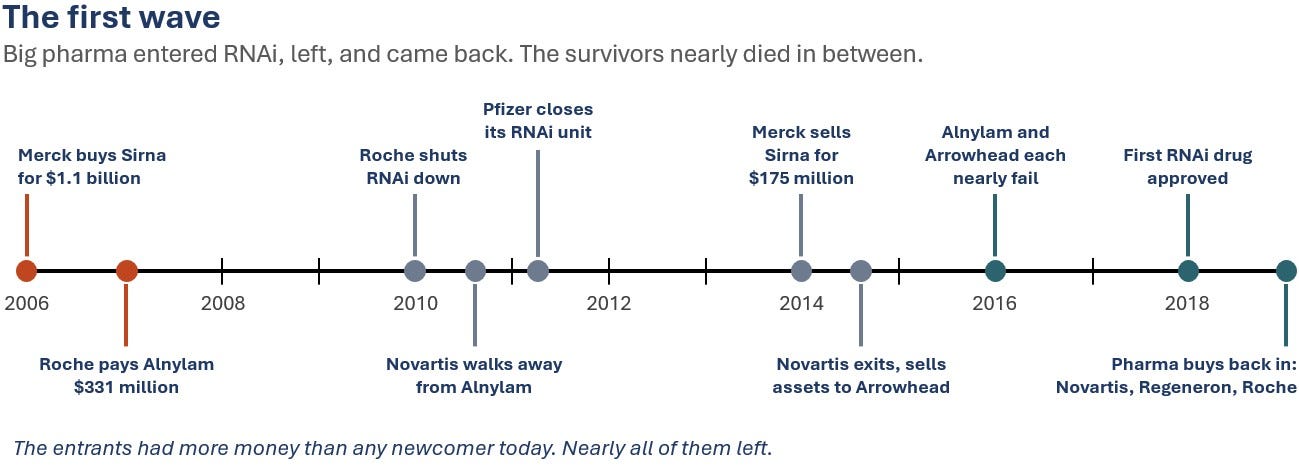
Figure 1. Sources: company filings and contemporaneous reports. Dates are the public announcements.
Here is the part that matters most. The first wave did not fail somewhere exotic. It failed at the liver. Early trials were confounded by inflammation from the fatty particles used to carry the drugs, and it was hard to even prove the effects came from silencing the target. The science was getting better fast. Pfizer’s own former chief scientist for its RNAi unit said liver knockdown improved about a hundredfold between 2008 and 2011. The companies left anyway, because the improvement was not arriving on the clock their boards were watching.
Alnylam’s president at the time called big pharma a miserable barometer of new platforms, and pointed out that it had made the same mistake with antibodies a generation earlier. He was right. By 2019, Novartis, Regeneron and Roche were all buying back in.
The last time everyone entered this field, the entrants were the richest companies in medicine. Nearly all of them left, and the problem that beat them was the liver.
3. What it took to survive
The two survivors did not win because they never failed. They won because they failed at the worst possible moment and kept going.
In October 2016, Alnylam halted revusiran, its second most advanced drug, after 18 patients died in a 206-person trial and the data showed more deaths on the drug than on placebo. The stock fell 48.5 percent in a day. A month earlier, it had stopped another program after liver enzyme rises in healthy volunteers.
Seven weeks later, Arrowhead discontinued all three of its clinical programs. Its intravenous delivery vehicle had caused deaths in a primate toxicology study, at doses higher than those planned for people, and regulators made clear the questions would take a year and a half or more to answer. The stock fell more than 65 percent in a day.
Both companies came back. Alnylam’s first drug was approved in 2018, sixteen years after the company was founded. Arrowhead already had a new system, given by a shot under the skin, working in animals at lower doses with good safety margins. That system, the one it uses today, reached the clinic within about two years.
What each company carried out of 2016 was not a drug. It was a record: which sequences caused trouble, which chemical changes made the difference, what the monkeys showed before the people did, and how to read early warning signs the next time. Fragments of that record show up in papers and patents. The complete failure history does not, and it is the main asset a newcomer cannot buy.
The survivors are not the ones who never failed. They are the ones who failed in 2016 and kept the notes.
4. In the book: the liver is open
Chess players call published opening theory the book. Anyone can study it, and strong players know it cold. A decade ago the liver was out of book. Today it is in it.
The reason is a sugar tag called GalNAc, which steers an siRNA to liver cells, plus a set of chemical changes that let the drug survive in the body for months. Alnylam worked that out over years of trial and error. The methods have been published for a long time, the core patents are aging, and the rest of the field has learned them. A well-funded newcomer with experienced hires can now build a competent liver drug far faster than the pioneers could. The deal flow shows it. The Argo programs Novartis licensed are liver-delivered drugs for heart and metabolic disease, and some are already in mid-stage trials.
The clearest American example went public in late September. ADARx was founded in San Diego in December 2019 and is run by Arrowhead veterans. Its chief executive, Zhen Li, worked on siRNA chemistry at Merck and later ran chemistry and nonclinical development at Arrowhead. Its chief technology officer, Rui Zhu, was a key inventor on the programs that became Arrowhead's Redemplo.
The company's name comes from ADAR, the enzyme behind RNA editing, and in its early years it described a platform for silencing, degrading and editing RNA. By the time of its IPO, its filing described a next-generation siRNA company, and its three drugs in human trials all silence genes in the liver. It raised $446 million in an upsized offering, after AbbVie paid $335 million upfront for options on its next drugs. Its programs beyond the liver are still preclinical, and its brain program is not expected to enter a first trial until late 2027 or early 2028.
The company has not said why its emphasis changed, and I will not guess. The record shows what reached the clinic first. Veterans carry the book with them, and what they build first is what is already in it.
I want to be straight forward about what that means for Arrowhead, because it is not comfortable. The company’s approved drug and most of its near-term revenue come from the liver. Its nearest competitor there today is Ionis’s Tryngolza, not a Chinese copy, and Chinese liver drugs are still years from an American or European label. When they arrive, they will press on prices and on what Arrowhead can charge partners for liver programs. That pressure is coming. It is not here yet, and any paper that pretends it will never come is not worth your time..
The liver was the moat. It is becoming the commons. The moat did not disappear. It moved.
Notice the shape of the history, though. The first wave failed at the liver because the liver was out of book. The newcomers can succeed at the liver because they arrived after the book was written. Beyond the liver, they face a problem structurally similar to the one Merck and Roche faced in 2008.
The important point, then, is not that Arrowhead and Alnylam still own the liver. Increasingly, they do not. It is also not that every tissue beyond the liver is equally unknown. The board now has five parts. The liver is becoming a commons.
Muscle already has an opening, written by someone other than Arrowhead or Alnylam. Fat cells have an early opening, first sketched by Arrowhead. The lung has a more developed one, also Arrowhead’s, reached by inhaler. The brain has no book yet for anyone, the incumbents included, and neither do the eye or the heart. The advantage has moved toward the parts of the board where the field has not standardized the answer: getting into new tissues, knowing early when a program is going wrong, and having the history to prove a chemistry is safe.
Patients, the barrier that grows after success. This one does not fade as the book gets written. It grows. Once a drug is approved for a disease, the next one has a harder time finding patients. Doctors and ethics boards are reluctant to give a placebo to patients who could take a drug that works, so later trials usually test the new drug on top of the approved one, or against it. That takes more patients, a bigger effect and more time. In rare diseases, the few centers that see these patients are often already running the first company’s trials. The chemistry of the liver is a commons. The patients are not.
This barrier does not favor incumbents. It favors whoever is first in a disease, and Arrowhead knows it from the losing side, following Ionis’s Tryngolza into severe hypertriglyceridemia. For the second wave, it compounds the problem. Many of the liver genes it is going after, such as PCSK9, APOC3 and Lp(a), already have approved drugs or late-stage rivals. A newcomer can build a competent liver drug quickly and still spend years filling the trial that proves it. China offers a partial way around, with large numbers of untreated patients and fast trial startup, but American regulators have been reluctant to approve drugs on Chinese data alone, so the global trial still has to be run.
The same logic runs in reverse in the brain. No drug is approved to slow PSP or inherited frontotemporal dementia. Whoever gets there first will not just win the first approval. It will make every trial after it harder to fill.
5. Out of the book: five barriers
The second wave is not entering the field to stay in the liver. Its ambitions extend to the brain, muscle, fat and lung, because those are among the major remaining frontiers. Those tissues are not equally open, though, and the incumbents are not only Arrowhead and Alnylam. Ionis has decades of experience with antisense, a cousin technology, in many of the same tissues, and Novo Nordisk owns Dicerna.
Muscle already has an opening. Avidity, now part of Novartis, delivered siRNA into human muscle with an antibody. Dyne uses a similar antibody to carry exon-skipping drugs into muscle, and the FDA accepted its first application in July, with a decision due January 21, 2027. A newcomer that reaches muscle in the next few years will mostly be learning an opening Avidity and Dyne have already demonstrated.
Fat needs a definition. The word does two jobs, so it needs pinning down. Some obesity drugs, including Arrowhead’s INHBE program, silence a gene in the liver and change how the body stores fat. Those are liver drugs, and they stay in the book. Others deliver the drug into fat cells themselves, and in this paper, fat means that second kind. Here an early opening exists, and Arrowhead sketched it.
In January, it reported that its ALK7 drug cut the target gene in fat cells by a mean of 88 percent at the top dose, in four people at week 8, with a 14.1 percent placebo-adjusted drop in visceral fat after one dose. The company called it the first RNAi drug to silence a fat-cell gene in humans. It is small and early, a first page rather than a book. It shows the drug can reach the fat cell, and it has not yet shown how long the effect lasts. SiranBio’s SA030, licensed to GSK in May, is the first second-wave attempt to follow.
The lung has a short book. Arrowhead wrote this one too, by inhaler rather than injection, and it is further along than fat. Its inhaled drug ARO-RAGE was tested in a randomized trial in healthy volunteers and people with asthma, published in Nature Medicine in September. A single dose cut its target protein by a mean maximum of about 90 percent in fluid washed from the lungs, with silencing still deep weeks later, and asthma patients showed a matching drop in the blood. One company, one target, inhaled rather than injected, and not yet copied. That is closer to a short book than a first page.
The brain has no book yet. Here everyone is out of book, the incumbents included. Alnylam’s most advanced brain drug is still given by spinal injection, and Arrowhead’s shot under the skin gets its first human test on October 14. The same is true further out. Arrowhead lists the eye and heart muscle cells as preclinical delivery targets, though an unannounced eye drug, given by a shot under the skin, has been enrolling on the public trial registry since June. Nobody has shown either tissue reached from a shot under the skin in people yet.
The five barriers below apply most to the brain. They still slow anyone trying to copy the newer openings in fat and lung, where only one company has human data so far. They are not the same height, so I have listed them from tallest to shortest.
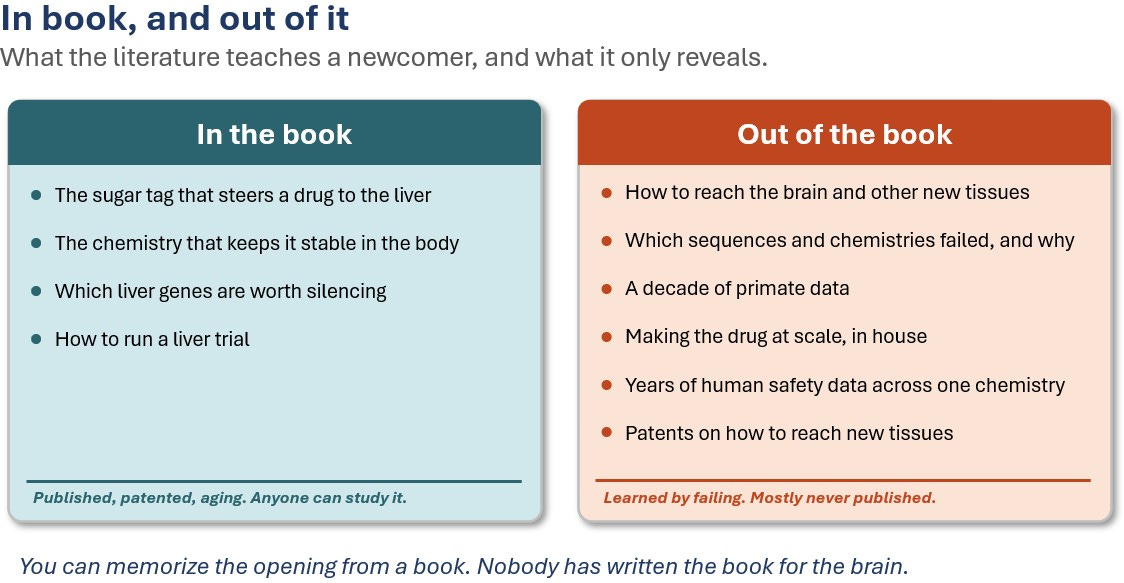
Figure 2. Author’s summary of what published science and patents teach a newcomer, and what they only partly reveal.
Failure memory, the tallest. A newcomer can hire veterans, and the best ones have, as ADARx shows. What it cannot hire is the shared record of what did not work, because that record lives in the group, not in any one person. I made this argument at length in The Seconds, and the second wave is its real-world test. Artificial intelligence does not automatically close the gap. The models learn from failure data, and much of that data is exactly what the incumbents never published. I should be honest that this is also the barrier I can least prove. Nobody outside a company can inspect its failure file, and the difference will only show when a new chemistry runs into a 2016style surprise.
Safety history. Regulators get comfortable with a chemistry slowly, one trial at a time. Arrowhead and Alnylam each have years of human safety data across thousands of people, counting their partners’ large trials. They also learned some lessons the hard way, as 2016 showed. A newcomer introducing a materially new chemistry starts much closer to zero, and the clock runs in years.
Monkeys, tall but changing. Delivery beyond the liver is hard to work out fully in mice. Blood-brain barrier crossing, muscle uptake and fat distribution differ between species, so for several tissues beyond the liver, and especially the brain, primate studies remain one of the most informative bridges between mice and people. Monkeys are scarce and expensive. In 2026 the price of a research-grade cynomolgus monkey in China reached about 200,000 yuan, roughly 30,000 dollars, close to its all-time high and more than double what it cost a year earlier.
For programs that lean heavily on primate testing, preclinical costs have run past twenty million yuan, with the monkeys as much as half of it. One Chinese brokerage projects a shortfall of fifteen to twenty thousand animals between 2026 and 2028. Well-funded companies lock in supply in advance. Biotechs with less cash have to choose which programs to delay.
It is not easier in the United States. China halted primate exports in 2020, and in 2021 the national primate research centers could not meet two-thirds of researcher requests. Arrowhead and Alnylam have more than a decade of primate data on their own chemistries. That history does not let them skip the studies for a new delivery handle.
Arrowhead’s brain drug still needed its own primate package. What the history buys is a shorter conversation with regulators about the backbone chemistry, and a trained eye for reading what the animals show. A newcomer gets neither, and has to queue for animals that cost far more than they used to. It is less a time machine than a head start. This barrier could also shrink as regulators push toward non-animal methods, a point I come back to in Section 8.
Patents, a middle barrier. The tricks for reaching new tissues are patented, and the incumbents hold many of them. A newcomer has to design around them or license them, and has to be ready for a fight if it guesses wrong. Alnylam has shown it will go to court over chemistry, suing Pfizer and Moderna in 2022 over lipid technology it says their COVID vaccines used. That case was about a different technology, though, and the patent estates that matter beyond the liver have not been tested in court against a newcomer. Determined competitors can sometimes design around them. I am asserting this barrier more than showing it, which is another reason it sits in the middle, and mapping those estates properly is a paper of its own.
Manufacturing, the shortest. This is the shortest barrier, and I want to be clear about why. Nobody needs their own factory to make clinical supply. Contract manufacturers exist, and some of the biggest are Chinese. That has turned from a convenience into a risk. The BIOSECURE Act became law in December 2025. In June 2026, WuXi AppTec, which makes drug substance for many American biotechs, including at least one oligonucleotide company, was added to the Pentagon’s list of Chinese military companies.
On August 7, a federal judge blocked the Pentagon from enforcing that designation while WuXi’s lawsuit proceeds, though a separate route onto the BIOSECURE list remains open and the first list is due by December. Existing contracts get a five-year grace period, and the law restricts federal contracts and funding rather than drug sales. Legally, it is a complication rather than a wall, and a shorter one than the June headlines suggested. The telling part is what happened anyway. Within weeks of the June listing, customers canceled projects or moved programs to other suppliers. Supply chains move faster than courts.
Arrowhead built its own 160,000-square-foot plant in Verona, Wisconsin, for about 250 million dollars, designed for commercial-scale production of its drugs. That is an advantage in control, supply and insulation from politics, not knowledge nobody else has. It matters most at scale, and the biggest-volume programs, such as liver-acting obesity drugs, sit in the part of the board that is becoming a commons. The plant protects the commoditizing business. It is not the brain moat.
A monkey costs thirty thousand dollars. The trained eye that reads the study does not come with the animal.
6. What the odds actually look like
I want to be careful here, because the easy version of this argument is wrong. Across all of drug development, experienced sponsors do only somewhat better than new ones. One study of trials across this century found the top twenty pharmaceutical companies took drugs from first human trials to approval 9.2 to 9.8 percent of the time, against 8.0 to 9.0 percent for biotechs. Sponsor track record does matter, and the BIO study of the last decade found it significantly tied to late-stage success, but it is a nudge, not a cliff.
The broad statistics, then, do not justify assuming the newcomers will fail. This field’s own history supplies a more specific warning. The first wave had more money, more chemists and more monkeys than any newcomer today, and nearly all of it left. The two survivors nearly died. That is a small sample from a different era, and I am not going to pretend it is a statistical base rate. It is a warning: when delivery moves beyond what is already solved, money and talent have not been enough to make development predictable.
The time it takes is just as telling. Alnylam was founded in 2002 and got its first approval in 2018. Even now, after more than twenty years, its most advanced brain drug is still given by spinal injection. If the company that wrote most of the liver book is still working out the brain, a five-year-old company should not be expected to do it on schedule.
The exception came before the second wave, and it proves the point. Avidity, founded in 2012, used an antibody rather than a sugar to carry siRNA into muscle. It announced the first delivery of siRNA into human muscle in December 2022, a decade after it started. In October 2025, Novartis agreed to buy the company for twelve billion dollars, a forty-six percent premium. The lesson cuts both ways. A newcomer can open a new tissue, given ten years and a book of its own. When one does, the prize is the whole company. That is the real claim of this paper. It is not that newcomers cannot succeed beyond the liver. It is that they cannot copy that success on the timetable the liver allowed.
The Avidity sale also sets up a choice for any company that wants into a tissue nobody else has opened. It can wait a decade for someone to write the book, or buy the company that already has.
Notice, too, how pharma itself is pricing the second wave. Most of every headline value is paid only if the drugs work. Argo’s 5.2 billion dollar Novartis pact came with 160 million dollars upfront. A 160 million dollar upfront payment against a 5.2 billion dollar headline looks less like full conviction than a relatively inexpensive option on future success. GSK’s deal for SiranBio’s fat-cell drug is starker still: 55 million dollars upfront against about a billion in milestones.
Here is how I would set the odds. In the liver, newcomers can win, and some will. They can be cheaper, and that is part of what pharma is buying. In the brain, the one tissue where nobody has an opening for a drug given outside the spine, they face most or all of these barriers at once. I expect most of those programs to arrive years later than planned, cost more than budgeted, and run into safety questions the incumbents have more practice reading. Whether their drugs will be worse is unknowable today, because no second-wave company has yet established a durable human opening outside the liver. That they will often be slower and more expensive is the part I would bet on.
The newcomers will be judged where their own book ends. For many of them, that is still the liver.
7. What to watch
This argument is testable, and the evidence will arrive over the next few years. Here is what I will be watching.
Copies of the existing openings, and the brain. Muscle data from a second-wave company would mostly show that the Avidity and Dyne opening can be learned. Fat-cell or lung data would show the same about Arrowhead’s openings. SiranBio’s ALK7 program for GSK is the first such test, and its Phase 1 data could arrive soon. Note how long each copy takes, because that is the real measure of a head start. The dataset that matters most is different: silencing in the human brain from a drug given outside the spine, by anyone other than Arrowhead. Nobody has shown it yet.
How much is paid upfront. If upfront payments start to rise as a share of headline deal values, pharma is gaining confidence in the newcomers. If they stay small, it is still buying options.
Monkey prices. Prices rising further means the barrier is getting taller. Prices falling, or new supply coming online, means it is shrinking.
The BIOSECURE list. Whether WuXi AppTec and others land on the government’s first list of companies of concern, due by December, and how quickly newcomers move their supply.
The first liver approval and its price. The first Chinese-origin liver siRNA approved in the United States or Europe, and the price it launches at, will tell you how much pressure Arrowhead’s liver franchise faces.
October 14. The first human data from Arrowhead’s brain drug, in healthy volunteers, arrives on October 14. It will show whether a shot under the skin gets the drug into the human brain and lowers its target. It will not show whether the drug helps anyone with Alzheimer’s. Patient data comes later.
8. What would make me wrong
Four results, in order of how much they would hurt the argument.
A newcomer reaches the brain in people, quickly. If a second-wave company shows lasting silencing in the human brain within the next two or three years, from a drug given outside the spine, especially with a pharma partner supplying the monkeys and the manufacturing, the barriers were lower than I have made them. That is the result that would hurt.
Monkeys stop mattering. The FDA published a roadmap in 2025 to reduce reliance on animal testing in preclinical safety studies. If lab-grown tissue models and computer simulations become acceptable substitutes for primate work faster than I expect, the monkey barrier shrinks, and so does the value of a decade of primate data.
The liver erodes faster than I think. If Chinese liver siRNAs reach approval and win share at prices Arrowhead cannot match, the liver section of this paper turns out to be understated, and the company’s near-term revenue is in more trouble than its platform story suggests.
A newcomer copies an existing opening, quickly. A second-wave company that matches Avidity and Dyne in human muscle, or Arrowhead in fat cells or the lung, within a few years would be mildly damaging. It would show that a written book can be learned fast, which shortens how long any head start lasts.
9. Out of book
When a chess player leaves published theory, the commentators say the game is out of book. From that moment every move has to be found at the board, on the clock, with no book to copy. Strong players prepare for this. They know the book, and they also know what happens after it ends, because they have been there before, lost, and written down what they learned.
In 2008 the liver was out of book, and the richest companies in the world could not find their way through it. The newcomers arrived after that book was written. In the liver they are already playing the middlegame, and pharma has paid for their seats. In muscle, one company wrote a book of its own and sold it for twelve billion dollars. In fat cells, Arrowhead has written the first page. In the lung, by inhaler, it has written a short book. In the brain, everyone is out of book, the incumbents included.
That is the honest shape of the advantage. It is not a locked position. It is a head start and a file of failures, in the part of the board where nobody has written a page. Arrowhead went out of book in 2016 without wanting to and has been playing at the board ever since. On October 14 it will show, for the first time in people, whether a shot under the skin can reach the brain. Whether that helps anyone with Alzheimer’s is a later question.
The opening is for sale now. The middlegame still has to be earned.

A Note on Supporting Independent Research
If this white paper has been valuable to you, whether it shaped your thinking, validated your conviction, or simply saved you the time of doing this work yourself, a voluntary contribution is genuinely appreciated and directly funds the next paper.
For individual investors and readers
Any amount you feel reflects the value you received is welcome and meaningful. A contribution in the range of what you might pay for a single premium research report is a thoughtful gesture that makes a real difference.
For family offices, investment funds, hedge funds, and research platforms
This paper is the caliber of work that institutional research desks bill significant retainers to produce. If your team referenced it, distributed it internally, or used it to inform a position, a suggested contribution of $1,500 reflects the professional value of the analysis, though any amount is meaningful. Your support makes it possible to continue publishing at this level without a paywall that limits the reach of the ideas. If your organization requires an invoice to process a payment, please reach out directly at bioboyscout@gmail.com and one will be provided promptly.
There is no obligation and no expectation. This is purely a thank you for work that meant something to you.
Zelle: (847) 227-7909
Thank you for reading, and for being part of a community that takes this thesis seriously.
— Robert Toczycki | BioBoyScout
Important Risks, Disclosures, & Disclaimers
The author, Robert Toczycki (aka BioBoyScout), certifies that:
all views expressed in this white paper accurately reflect his personal opinions about the topic discussed;
he was not compensated in any form for producing this white paper; and
he has not received and does not receive compensation from Arrowhead Pharmaceuticals.
This paper is provided for informational and analytical purposes only. It does not constitute investment advice, financial advice, legal advice, or a recommendation to buy, sell, or hold any security, and it is not a recommendation as to any corporate course of action. The author holds a long position in Arrowhead common stock. Past performance is not indicative of future results, and forward-looking analysis is inherently uncertain. The author and BioBoyScout are not registered investment advisors. The author assumes no obligation to update this paper. The characterization of what is and is not in the published literature, the probability judgments, and the chess analogy are the author’s own.
About the Author
BioBoyScout is the publishing name for Robert Toczycki, an independent biotech investment research writer based in Chicago. The BioBoyScout series publishes institutional-grade analysis of structural dynamics in RNA-class therapeutics, with particular focus on Arrowhead Pharmaceuticals’ TRiM platform and the broader competitive landscape. Robert is a registered US Patent Attorney with a JD, an Executive MBA completed at the top of his class, and a BS in Mathematics and Computer Science from the University of Illinois at Urbana-Champaign. He has a deep passion for financial analysis, particularly identifying valuation discrepancies and demonstrating them through rigorous, data-driven research and solid analytics.
Comments or questions: bioboyscout@gmail.com.
Copyright © 2026, BioBoyScout. All Rights Reserved.