

Robert Toczycki, JD, MBA
bioboyscout.com
bioboyscout@gmail.com
847.227.7909
X: @BioBoyScout
1. Three notes, one week
Morgan Stanley, Stifel and Bank of America all published fresh commentary on Arrowhead within days of the ESC presentations. All three are positive. All three carried price objectives set earlier in the summer, at $120, $104, and $100, and none of them moved.
I read all three looking for what they disagreed about. What struck me instead was what they had in common, and it is not a disagreement at all. It is a shared limit in the tool.
2. What each of them does
Morgan Stanley runs a single discounted cash flow. That means projecting the company’s future cash and discounting it back to today, in their case at 10 percent a year with 1 percent growth after that. There is no breakdown by drug and no disclosure of what odds are being assigned to any of them. The $120 is one number produced by one model, and a reader cannot see which assumption is carrying it.
Stifel says the quiet part out loud and then does it anyway. Condulis writes that the market gives the brain program, the dual-target molecule and the two obesity assets essentially no credit. He is right. He then builds a valuation that gives those same programs what he describes as highly risk-adjusted credit, which is a polite way of saying not much. He identifies the mispricing and then only partly corrects for it.
Bank of America shows its work, which is why its note is the most useful of the three. Gerberry breaks the valuation into pieces. The APOC3 franchise, meaning the approved drug plus the wider patient population it is applying to sell into, carries about half the entire company. The partnered liver program carries 9 percent. The two obesity programs carry 6 percent.
Everything else sits in one bucket worth about a quarter of the company, marked down on the assumption that each program has less than a 30 percent chance of working.
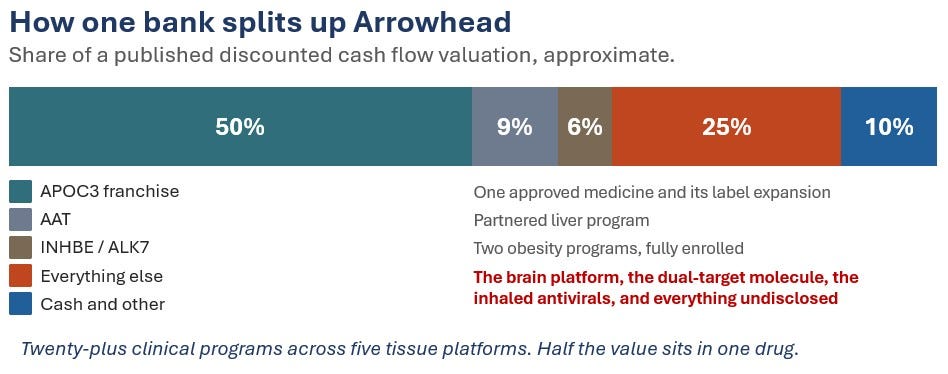
Figure 1. Composition as described in the published note. Percentages are approximate.
Look at what is inside that quarter. The brain platform, a systemically delivered route into the central nervous system with extensive primate data and its first human clinical readout arriving this month, with a patent listing thirty-four targets behind it. The dual-target molecule reading out this month. Two inhaled antiviral programs. Whatever else has not been announced.
More than twenty clinical programs spanning liver, lung, muscle, adipose and now the central nervous system, on a delivery platform with an unusually broad tissue footprint. Half the value sits in one drug and the brain program shares a quarter-slice with everything the company has not announced yet.
3. Why this happens, and it is not carelessness
These three notes do not all use the same method, and that is part of the point. What they share is a modeling convention: value what can be modeled, discount it for risk and for time, and leave out what cannot be modeled.
The most common implementation is called risk-adjusted net present value, where you value each drug separately. Morgan Stanley instead runs one company-wide cash flow. Different arithmetic, same convention underneath.
The idea is simple and it is sound.
You take each drug, estimate the cash it would generate if it works, multiply by the odds it works, and discount the result back to today. Add up all the drugs and you have a company. A cancer drug in Phase 1 might get 10 percent odds. An approved drug gets close to 100. It is disciplined, it makes you say out loud what you are assuming, and for most biotech companies it is exactly the right tool.
The trouble starts when a company’s biggest asset is not a drug at all.
Every discount in that calculation gets applied to something that already exists. A molecule with a name, a trial running, a date on a calendar. Conventional practice has no line for the thing that produced those molecules and will produce the next twenty. An analyst could create one. Nothing in the arithmetic forbids a line for the platform, for how productively it generates candidates, or for what people call optionality, meaning the value of being able to do something you have not committed to yet. It is simply that doing so requires assumptions that are hard to defend in print. The line therefore does not get created, and the ability to invent the next drug carries no explicit value at all.
As conventionally built, risk-adjusted valuation prices the inventory and not the factory. For most biotech companies that distinction does not matter, because there is no factory.
4. Undrilled acreage
There is an industry that built a language for exactly this problem decades ago, and I think the comparison is worth walking through.
Nobody values an oil company by adding up the cash from wells that are pumping today. That would be absurd. It would price a company sitting on an enormous untapped field exactly the same as one that has already pumped its last barrel.
The industry built categories instead:
Wells that are producing.
Reserves that have been found but not yet developed, where you know the oil is there and have not built the infrastructure.
Prospects, which are locations the seismic work has identified as worth drilling but where nobody has drilled.
Then undrilled acreage, which is land you hold and have not yet surveyed.
Each of those categories can carry value, and acreage itself regularly changes hands at a price per acre. Companies pay real money for the right to drill holes that may find nothing, because the option to find something is worth something before you know.
Now put Arrowhead into those buckets.
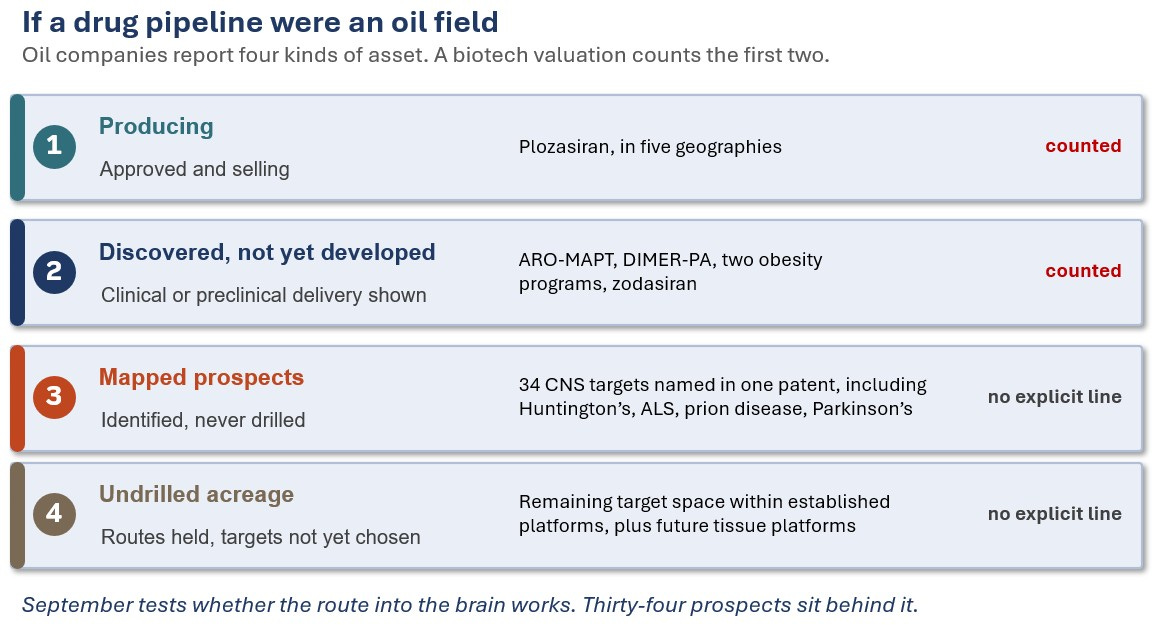
Figure 2. Categories adapted from oil and gas reserve reporting. The mapping is illustrative.
Plozasiran is producing. Approved in five geographies and generating commercial revenue. A valuation counts it, and it should.
The clinical pipeline is discovered but not yet developed. ARO-MAPT, the dual-target molecule, the two obesity programs, zodasiran. Real trials, real timelines, with delivery demonstrated clinically for the lipid and obesity programs and preclinically for the brain one. A valuation counts these too, heavily discounted, which is reasonable.
Then it stops counting.
Here is the part I think gets missed. Arrowhead holds a patent listing thirty-four specific targets its brain delivery system is designed to carry. Not a vague ambition to work in neurology. Thirty-four named genes, written into a filing, covering Huntington’s disease, three genetic forms of ALS, four inherited ataxias, prion disease, Parkinson’s, chronic pain and more.
That number, however, is easy to run away with. A list of targets in a patent tells you what a company thinks its technology could be pointed at. It does not tell you there are thirty-four drugs sitting in a drawer somewhere. Nobody has shown that each of those genes can actually be drugged, that a molecule against it works, or that the resulting medicine would sell.
What it does establish is that somebody has done the survey work. In oil terms these are mapped prospects: locations identified as worth drilling, written down with coordinates, sitting behind a delivery route whose first human data arrive this month. That is not raw land.
They should not be valued as thirty-four drugs. Treating thirty-four identified applications of a heavily validated preclinical delivery system as carrying no explicit value today is also an assumption, and it is the one conventional modeling effectively makes.
The patent estate is the map. The brain patent is the one I have read closely. It is not the only one of its kind, and once you look at the whole estate the structure is unmistakable. It maps onto the oil categories almost exactly.
Arrowhead reports roughly 643 issued patents and 833 pending applications worldwide, across more than a hundred patent families. For the purposes of this analogy, two recurring kinds of filing matter most.
One kind claims a route into a tissue. GalNAc sugar clusters for liver. αvβ6 integrin ligands for inhaled delivery to the lung. Antibodies against the transferrin receptor, TfR1, for the central nervous system, which is the door ARO-MAPT walks through. Then skeletal muscle delivery platforms and lipid conjugates for adipose tissue, where the published titles name the tissue rather than the chemistry.
Five tissues, five dedicated delivery families, each with its own filings. That is the acreage side of the portfolio. Arrowhead is staking out the routes it intends to protect.
The second kind is target-specific. Filings aimed at a particular gene, or a defined combination of them, appearing as individual programs emerge. APOC3, ANGPTL3, alpha-1 antitrypsin, PNPLA3, HSD17B13, Lp(a), complement C3, complement factor B, XDH, factor XII, MARC1, PCSK9, INHBE and more in the liver. Alpha-ENaC, beta-ENaC, MUC5AC, RAGE, MMP7 and TSLP in the lung. DUX4 in muscle. ALK7 in adipose. MAPT in the brain. Influenza A and coronavirus for the inhaled antivirals.
Better than thirty named genes with their own filings, across five tissues plus the antiviral work.
Somebody should push back here, because listing targets in a patent is what patent attorneys do. The marginal cost of adding another contemplated target to a broad disclosure is tiny next to the cost of actually developing it. Broad biotech target lists can reflect lawyering as much as development intent, and treating one as a pipeline would be foolish.
What makes this one different is the conversion record. Arrowhead has done the same thing in tissue after tissue. Liver now has more than a dozen targets with dedicated patent filings. Lung has six. Adipose has ALK7, where the company has already shown direct knockdown in human fat tissue, and there is no obvious reason a working route stops at one gene. Arrowhead does not stake out a route and then work a single target in it. It works the ground.
That is the difference between a list and a record. A list tells you what somebody thought to write down. A demonstrated history of turning names into programs makes it reasonable to expect that at least some of the remaining names will become programs too.
Those are the wells. The brain estate is where you can actually watch one get drilled.
Several of the thirty-four have already made that trip. SOD1 sits on the brain delivery target list and has its own dedicated filings. Worth stating that ARO-SOD1 was discontinued before the planned Phase 1 study enrolled, so this is not a success story. It still progressed from a name on the platform map to dedicated IP and a clinical-stage program, which is the conversion I am pointing at. Huntingtin has made the same trip, the gene behind Huntington’s disease. MAPT has as well, which is the one reading out this month. Prospects on a map became locations somebody decided were worth drilling, and the paperwork followed them across.
That is the machine, visible in the filings. Delivery patents stake out ground. Target patents get filed as the company works through it. Better than thirty genes now have filings of their own, and the brain list still holds most of its thirty-four.
The dual-target molecule reading out this month is visible in the estate too, though the filings did not arrive in a tidy conceptual order. APOC3 had its own target filings years ago. PCSK9 came later. A separate family covers hepatic delivery platforms carrying multiple RNAi agents on one conjugate. Then a dedicated filing for dual inhibition of both targets at once, which the company lists in its annual report as its APOC3 and PCSK9 dimer group. Which patent came first is not the point. The point is that the estate holds all three layers: the individual targets, the architecture for carrying more than one at a time, and eventually the specific combined drug.
A conventional valuation counts the wells. It does not count the ground, and it does not count the fact that the company keeps walking across it.
Nearly nineteen years of assembling all of it, and little of that capability appears explicitly in a conventional valuation, because there is no individual drug to attach a probability to.
5. The best argument against me
There is a serious case on the other side.
Platform value is exactly the sort of claim that gets abused. Every biotech with two molecules calls itself a platform company. Most of them are not. The graveyard is full of delivery technologies that worked once and never again, and an analyst who declined to pay for optionality was right far more often than wrong.
Analysts cannot model what does not exist. Refusing to assign value to an unnamed future drug is not a failure of imagination. It is discipline, and the alternative is a valuation that can be justified at any number you like.
Optionality is also unfalsifiable. If I say the platform is worth several billion dollars and you disagree, neither of us can settle it. If every unnamed future target can be invoked to justify today’s price, platform analysis stops being valuation and becomes storytelling. That is a genuinely bad property for a valuation input, and I understand entirely why a professional putting their name on a published number would rather leave it out.
6. What survives that
Three things.
The blind spot comes from the convention, not from a judgment that the platform is worthless. Three firms took different routes and arrived in the same neighborhood. That is not three analysts independently concluding the pipeline is worth little. It is a shared convention that tends to arrive there by construction, because standard practice gives the arithmetic nowhere to put platform optionality unless an analyst deliberately builds a separate category for it.
The analysts themselves know it. Stifel wrote that the market gives these programs no credit. That is not a stray observation. His own model then gives them some heavily risk-adjusted value, but only partly repairs the gap he had just identified. When somebody identifies a pricing failure and then only partly corrects for it in the same document, the constraint is more likely in the framework than in the analyst.
There is a third thing, and I hold it more loosely. Acquirers run these calculations too, so the difference is not that they use a different arithmetic. It is that a strategic buyer can pay for things a published asset-by-asset model has no room for, including competitive position, what the target denies a rival, and what the organization might produce next. When Roche bought the rest of Genentech it paid roughly $46.8 billion for the 44 percent it did not own, implying a total above $100 billion.
Genentech had enormous approved products by then, so I would not claim Roche was paying purely for the engine. What is more suggestive is what Roche chose to preserve after buying the rest. Genentech research and early development continued as an independent center inside Roche, explicitly to protect the culture and the research approach that had generated the pipeline. Roche bought the products. It also took unusual steps not to break the factory.
Everything described so far is public. A pharmaceutical company can pull the same patents, study the same conversion record and reach its own view about what the remaining ground is worth. The asymmetry does not require privileged information.
What differs is the burden of explanation. A buyer can debate a platform premium internally. An analyst who lets the same assumption materially move a published price target has to explain it to clients and live with it in the model months later.
The buyer still faces diligence, return hurdles, integration risk and internal approval, and a serious bidder may later see things public investors never do. None of that is needed to notice the optionality in the first place.
That is the strange part. The value does not have to be concealed to be hard to express. It can simply sit in a category that published research handles awkwardly and a private strategic judgment handles more comfortably.
7. What better would look like
Not a bigger number. A visible one.
If a note showed each asset separately with its own probability of success attached, a reader could argue with the pieces. If it carried a line, even a small one, for programs the company has demonstrated it can generate but has not yet named, a reader could argue with that too. The number might come out lower than $100. That would be fine.
Somebody is going to ask what a platform line would even be built out of, and that is a fair question. It does not require pretending thirty-four drugs already exist. It could start with things that are actually observable: how often this company has produced a clinical candidate, how long each one took, how reliably its delivery chemistry has carried from one target to the next inside a tissue, and what a program has historically been worth once it reaches the clinic.
Then discount all of it heavily, because the targets are unnamed and most of them will fail.
The point is not the number that comes out. The point is that zero is a number too, and for programs that have not yet been named and modeled, it is the one conventional practice uses by default.
The problem is not that the resulting values are too low. It is that when half the value sits in one drug and the entire brain franchise is inside a bucket labelled everything else, there is nothing specific to disagree with.
That standard should apply to my own work as much as anybody’s. When I put a number on Arrowhead in an acquisition context, I showed three possible buyers, what each could afford, what holds each of them back, and how a contested sale would end up setting the price. Anyone who thinks I am wrong can say which of those is wrong. That is the bar, and I would rather be visibly wrong than opaquely right.
8. Why this matters right now
Two readouts land this month. One asks whether a single molecule can switch off two genes at once. The other asks whether a shot under the skin can switch off a gene inside a living human brain.
Both of those sit inside the 25 percent bucket.
If they work, the thing that changed is not that two drugs got better odds. DIMER working tells you something about DIMER and something about whether Arrowhead can build molecules that hit two targets at once as a general matter. MAPT working tells you something about MAPT and something about whether a shot under the skin can produce meaningful target knockdown in the human central nervous system at all.
A drug readout updates the probability of one drug. A platform readout updates the probability distribution of drugs that do not exist yet. Conventional models naturally register the first and usually leave the second implicit.
The market finds out this month whether the land has oil under it. The question is whether the models treat that as information about two wells, or as information about the field.

A Note on Supporting Independent Research
If this note has been valuable to you, whether it shaped your thinking, validated your conviction, or simply saved you the time of doing this work yourself, a voluntary contribution is genuinely appreciated and directly funds the next paper.
For individual investors and readers
Any amount you feel reflects the value you received is welcome and meaningful. A contribution in the range of what you might pay for a single premium research report is a thoughtful gesture that makes a real difference.
For family offices, investment funds, hedge funds, and research platforms
This paper is the caliber of work that institutional research desks bill significant retainers to produce. If your team referenced it, distributed it internally, or used it to inform a position, a suggested contribution of $1,000 reflects the professional value of the analysis, though any amount is meaningful. Your support makes it possible to continue publishing at this level without a paywall that limits the reach of the ideas. If your organization requires an invoice to process a payment, please reach out directly at bioboyscout@gmail.com and one will be provided promptly.
There is no obligation and no expectation. This is purely a thank you for work that meant something to you.
Zelle: (847) 227-7909
PayPal: paypal.me/bioboyscout
Thank you for reading, and for being part of a community that takes this thesis seriously.
— Robert Toczycki | BioBoyScout
Important Risks, Disclosures, & Disclaimers
The author, Robert Toczycki (aka BioBoyScout), certifies that:
all views expressed in this note accurately reflect his personal opinions about the topic discussed;
he was not compensated in any form for producing this note; and
he has not received and does not receive compensation from Arrowhead Pharmaceuticals.
This note is published by BioBoyScout and is intended for informational and educational purposes only. It does not constitute investment advice, a solicitation to buy or sell securities, or a guarantee of future results. The author holds a long position in Arrowhead common stock. Arrowhead Pharmaceuticals (ARWR) is a publicly traded company; investments in its shares involve material risks, including the risk of total loss. All financial projections, acquisition price estimates, and valuation analyses herein are hypothetical frameworks for analytical purposes and do not represent predictions of actual outcomes. Readers should conduct their own due diligence and consult a registered investment advisor before making investment decisions. Patent counts reflect the author's review of Arrowhead patent families, with each target family counted once regardless of jurisdiction or continuation. Valuation methodologies and composition figures are as described in published research notes from Morgan Stanley, Stifel and Bank of America following the ESC Congress, and percentages are approximate. Nothing here should be read as a criticism of any individual analyst's competence or integrity. The Genentech transaction value is as reported at the time.
About the Author
BioBoyScout is the publishing name for Robert Toczycki, an independent biotech investment research writer based in Chicago. The BioBoyScout series publishes institutional-grade analysis of structural dynamics in RNA-class therapeutics, with particular focus on Arrowhead Pharmaceuticals’ TRiM platform and the broader competitive landscape. Robert is a registered US Patent Attorney with a JD, an Executive MBA completed at the top of his class, and a BS in Mathematics and Computer Science from the University of Illinois at Urbana-Champaign. He has a deep passion for financial analysis, particularly identifying valuation discrepancies and demonstrating them through rigorous, data-driven research and solid analytics.
Comments or questions: bioboyscout@gmail.com.
Copyright © 2026, BioBoyScout. All Rights Reserved.
The sharpest observation here is that three positive notes landing in the same neighborhood is not confirmation but a shared convention, since all three price the inventory and none prices the factory; agreement produced by a common omission looks exactly like agreement produced by evidence. The list-versus-record distinction is what keeps the acreage analogy honest, and counting the discontinued SOD1 as a conversion rather than leaving it out is what makes the record believable. One extension: in oil, acreage carries a price because it changes hands, and the nearest equivalent here is what partners pay to license a route, so the terms of the next tissue-level deal may be the only external mark this kind of asset ever receives.